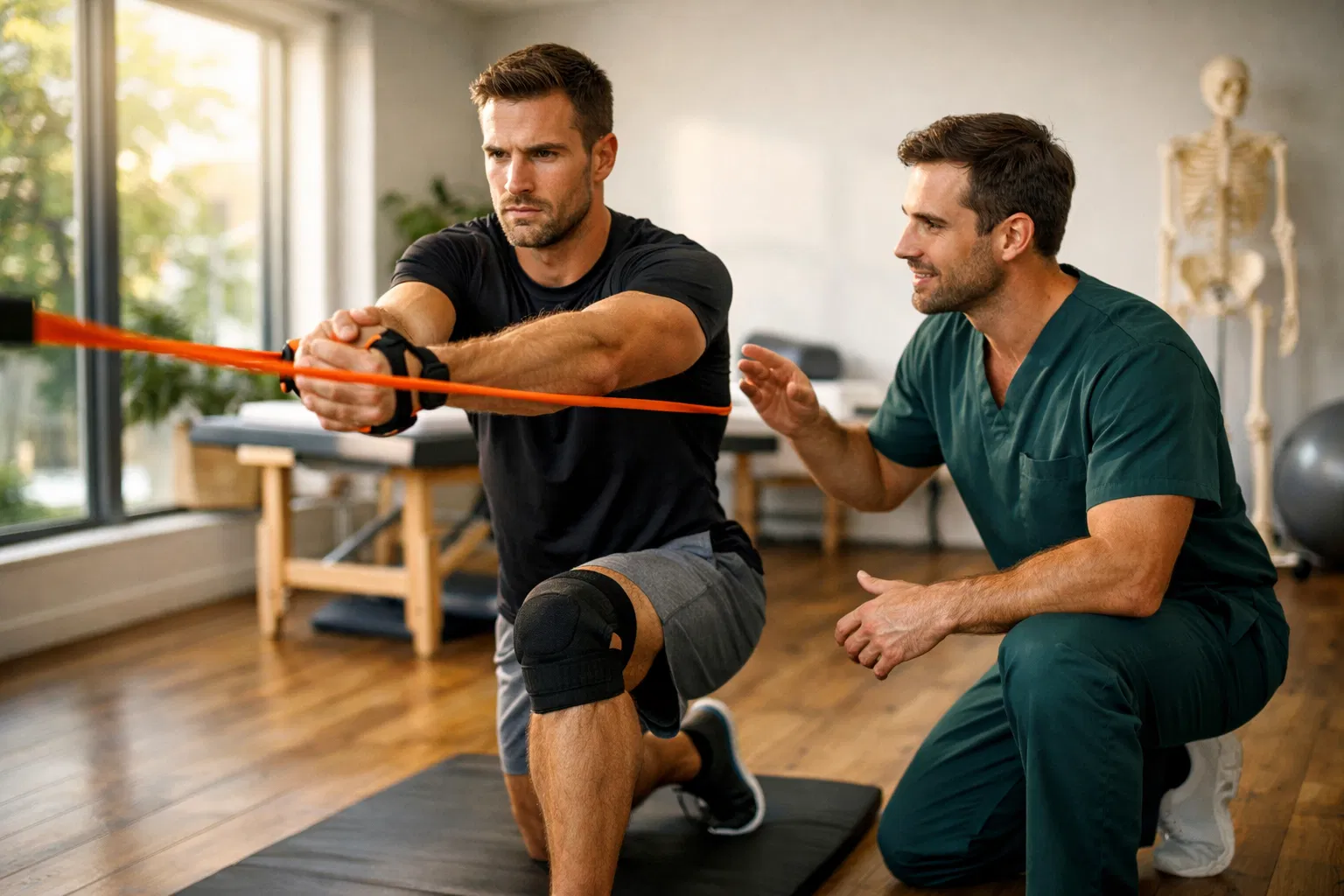
Sports Injury Physiotherapy in Ancaster
Fast, effective rehabilitation for athletes of all levels. From acute sports injuries to return-to-sport programs — we'll get you back in the game, stronger than before.
Sports Injury Rehabilitation
Whether you're a competitive athlete, a weekend warrior, or someone who simply loves staying active, a sports injury can be frustrating and disruptive. At Interlink Physiotherapy in Ancaster, we understand the urgency of getting back to your sport — and we combine evidence-based treatment with sport-specific rehabilitation to get you there safely and efficiently.
Sports injuries span a wide spectrum — from acute ankle sprains and muscle strains to complex ligament tears and stress fractures. The key to successful recovery is not just treating the injury itself, but addressing the underlying factors that contributed to it and building the strength, stability, and movement quality needed to prevent re-injury. At Interlink Physiotherapy, we use a phased rehabilitation approach: first reducing pain and restoring mobility, then rebuilding strength and neuromuscular control, and finally progressing through sport-specific movements to full return to play.
Common Symptoms
Common Causes
- Acute trauma — collisions, falls, awkward landings
- Overuse and repetitive strain from training load errors
- Muscle imbalances and movement dysfunction
- Inadequate warm-up or cool-down routines
- Previous injuries that were not fully rehabilitated
- Rapid increases in training volume or intensity
- Poor technique or equipment fit
- Fatigue-related injuries from insufficient recovery
Our Treatment Approach
Acute Injury Management
Evidence-based acute care using POLICE principles (Protection, Optimal Loading, Ice, Compression, Elevation) to minimize tissue damage and accelerate healing.
Manual Therapy
Hands-on joint mobilization and soft tissue techniques to restore mobility, reduce pain, and optimize tissue healing.
Strength & Conditioning
Progressive, sport-specific strengthening programs to rebuild muscle strength, power, and endurance safely.
Neuromuscular Training
Balance, proprioception, and agility training to restore the neuromuscular control essential for injury prevention.
Return-to-Sport Progression
A structured, criteria-based return-to-sport program with clear functional milestones before full clearance.
Injury Prevention Screening
Movement screening to identify risk factors and implement targeted strategies to prevent future injuries.
Why Choose Interlink Physiotherapy?
At Interlink Physiotherapy in Ancaster, we treat athletes the way athletes want to be treated — with urgency, precision, and a clear plan to return to sport. Dhiman Patel understands the demands of sport and the frustration of being sidelined. Our rehabilitation programs are progressive and goal-oriented, with specific milestones that tell you exactly where you are in your recovery and what comes next. We serve athletes from Ancaster, Hamilton, and surrounding communities.
Ready to Get Started?
Book your 60-minute initial assessment. No referral needed.
Book OnlineCall 289-205-8255✓ No referral required
✓ Direct billing available
✓ MVA & WSIB accepted
✓ Free 20-min discovery visit
Clinic Hours
Real Results, Real People
Hear from patients who've recovered, moved better, and reclaimed their active lives at Interlink Physiotherapy.
"Dhiman and the team at Interlink Physiotherapy are absolutely INCREDIBLE! I came in after breaking my ankle in two places and was struggling to walk again — but thanks to Dhiman's personalized treatment plan and expert care, I've made amazing progress. The staff are so friendly, knowledgeable, and supportive — they truly know their stuff. The atmosphere is calm, welcoming, and exactly what you need when recovering. I'm so grateful to have found them!"
Sierra
Ankle Fracture Recovery
"I had my initial assessment with Dhiman Patel and it was excellent! He was meticulous and kind — pairing what I told him with what his assessment found. I left with exercises to do and an explanation of what the root of my pain was. Pleasantly, I have already found my pain decrease through the movement I was prescribed. I valued the education, empowerment, and optimism I received at this first visit. The space is very welcoming and clean."
Hope
Initial Assessment & Pain Relief
"From the moment I walked into Interlink Physiotherapy, I felt like my recovery was finally in good hands. I'd been battling nagging shoulder pain that made even tying my shoes a challenge — but Dhiman's comprehensive assessment and tailored manual-therapy plan changed everything. His clear explanations and hands-on approach gave me the confidence to stick with my home exercises, and every member of the team has been warm, attentive, and genuinely invested in my progress."
Jordan
Shoulder Pain & Manual Therapy
"Wonderful experience. My hip pain went from 8/10 to 0/10 with Dhiman's help. The clinic is clean, fresh, and appointments are always on time. Dhiman really takes the time to understand your condition and builds a plan that actually works. I will definitely come back!"
Marcus
Hip Pain Recovery
"After months of knee pain that stopped me from running, Dhiman diagnosed the real issue and gave me a clear recovery plan. Within 6 weeks, I was back to my morning runs pain-free. His expertise and genuine care made all the difference. Highly recommend!"
Lisa
Knee Pain & Running Injury
Frequently Asked Questions
Everything you need to know before your first visit to Interlink Physiotherapy in Ancaster.
No referral is required. You can book directly with us at any time. Most insurance plans in Ontario also cover physiotherapy without a referral. If your insurance requires one, we're happy to help guide you through the process.
Get Back in the Game
Book your sports injury assessment at Interlink Physiotherapy in Ancaster. Fast, effective rehabilitation with a clear return-to-sport plan.
Or try our free 20-minute discovery visit — no commitment required.