Physiotherapy for Disc Herniation in Ancaster & Hamilton
A disc herniation diagnosis can be alarming, but most cases heal without surgery. We offer evidence-based, one-on-one physiotherapy to relieve your pain and get you back to your life.
Book My AssessmentDo You Have These Symptoms?
A herniated disc occurs when the soft, gel-like center of a spinal disc pushes out through a tear in the tougher exterior. This can irritate nearby nerves, causing a specific pattern of symptoms.
A Note on Imaging
A landmark study in the American Journal of Neuroradiology found that disc herniations are extremely common in people with no pain at all. Your symptoms and physical exam are more important than what an MRI shows. We treat you, not your scan.
Evidence-Based, Non-Surgical Recovery
A disc herniation diagnosis can feel alarming, but the evidence tells a reassuringly different story. The vast majority of disc herniations respond very well to conservative physiotherapy management and heal on their own with time and the right guidance.
At Interlink Physiotherapy, we help patients across Ancaster and Hamilton understand their diagnosis accurately and build a clear, evidence-based plan to resolve their symptoms — without unnecessary fear or dependence on passive treatments.
Patient Success Stories
We help people with disc herniations and sciatica get back to living pain-free. Here’s what they have to say.
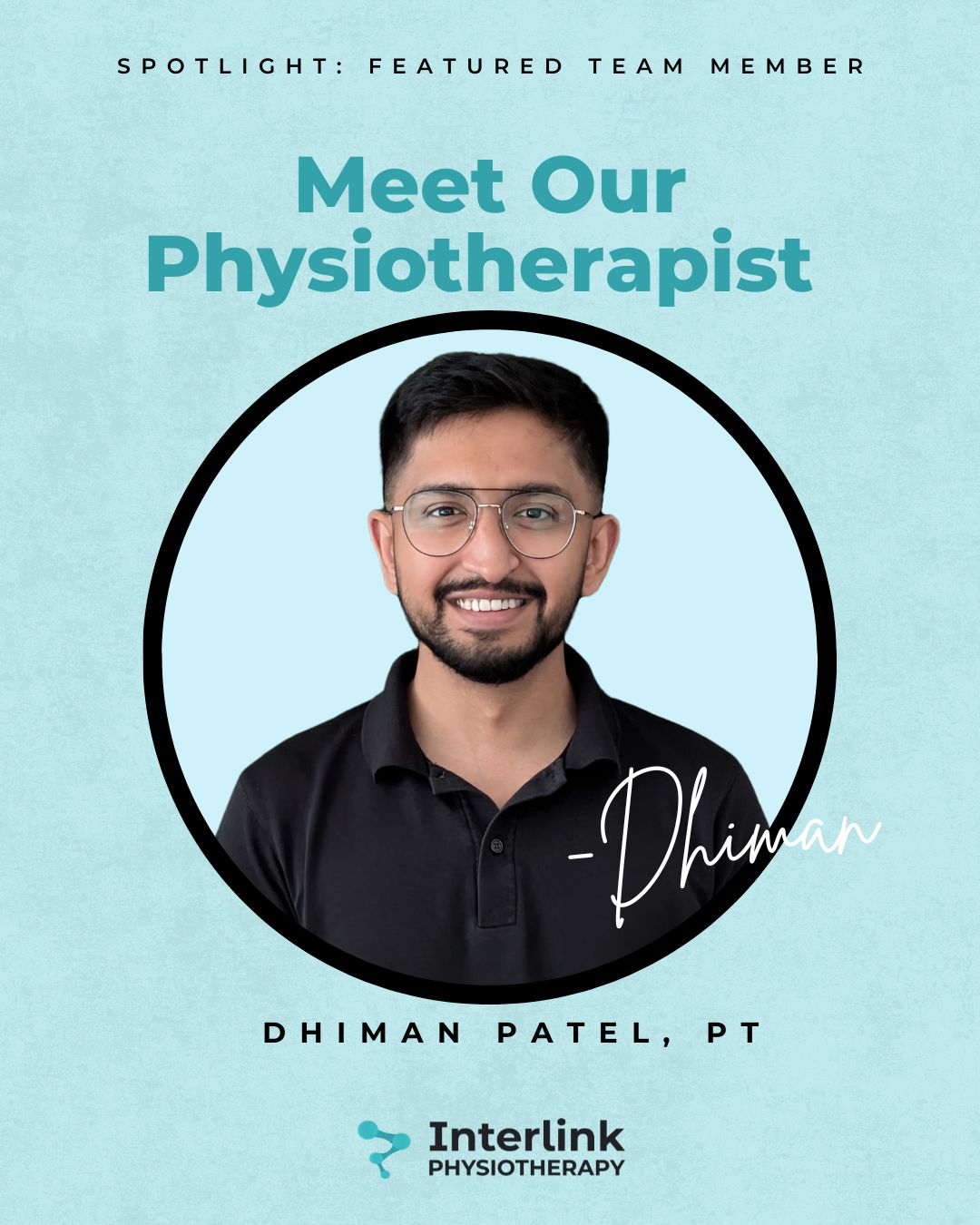
"My hip pain went from 8/10 to 0/10 with Dhiman's help. The clinic is clean, fresh, and appointments are always on time. I will absolutely come back. Wonderful experience from start to finish."
Elissa W.
Ancaster - Hip & Lower Back Pain
"They don't just treat the pain — they actually give you the tools to get stronger and prevent it from coming back. Highly recommend for anyone active."
Shan Kapoor
Ancaster - Back Pain
"I started my rehabilitation with Interlink a week ago and I've seen significant improvements already! Very clean and organized, friendly, helpful, and I will continue working with them till my full recovery."
David Austin O.
Hamilton - Back Injury Rehabilitation
Our 4-Step Disc Herniation Recovery Plan
We use a systematic, active approach to not only relieve your pain but also to strengthen your spine and prevent the problem from returning.
Accurate Diagnosis & Directional Preference
We start with a detailed assessment to identify the specific movements that centralize or reduce your symptoms (your 'directional preference'), as described by the McKenzie Method. This is crucial for creating an effective, targeted treatment plan.
Pain & Nerve Relief
We use hands-on manual therapy, including joint mobilizations and specific nerve gliding techniques, to gently relieve pressure on the spinal nerves, reduce pain, and restore healthy movement to the affected area.
Progressive Core Strengthening
Once your pain is under control, we build a progressive core stability and strengthening program. This is key to providing long-term support for your spine and preventing future recurrences.
Education & Self-Management
We empower you with the knowledge to understand your condition, manage your symptoms, and safely return to your activities. You'll learn which postures and movements to favor and which to avoid as you heal.
What to Expect
Your recovery is a partnership. Here’s our commitment to you.
1. One-on-One Care
Your entire 45-minute appointment is with your Registered Physiotherapist. No assistants, no double-booking.
2. A Clear Plan
You'll leave your first session knowing what’s wrong, the plan to fix it, and your expected recovery timeline.
3. Lasting Results
We focus on education and active exercises to empower you, reducing your reliance on passive treatments and preventing recurrence.
Physiotherapy vs. Other Options
When dealing with a disc herniation, you have choices. Here’s how evidence-based physiotherapy compares to common alternatives.
Physiotherapy
Pros: Addresses root cause, avoids surgery, builds long-term resilience, recommended first-line treatment.
Cons: Requires active participation and consistency.
Chiropractic
Pros: Can provide temporary relief through adjustments.
Cons: May not address underlying disc pathology or provide long-term strengthening.
Pain Medication
Pros: Temporarily masks pain signals.
Cons: Does not heal the disc, risk of side effects and dependency, pain often returns.
Surgery (Discectomy)
Pros: Effective for severe cases with progressive neurological loss.
Cons: Invasive, carries surgical risks, long recovery, not superior to physiotherapy for most cases (SPORT Trial, JAMA 2006).
Frequently Asked Questions
In the vast majority of cases, no. The SPORT trial (NEJM, 2006) found equivalent outcomes between surgery and non-operative treatment at 2 years for lumbar disc herniation. Surgery is generally reserved for cases with progressive neurological deficit or failure to improve with conservative care.
Most patients with acute disc herniation see significant improvement within 6–12 weeks of structured physiotherapy. Research shows that early, active intervention produces faster recovery, with many resolving symptoms within 3–6 months as the disc naturally resorbs.
Not necessarily. Disc findings on MRI are common even in people with no pain. The imaging must be correlated with your symptoms and clinical exam. Many patients with significant herniations on MRI achieve complete symptom resolution with physiotherapy.
Yes, with appropriate guidance. Current evidence strongly supports active rehabilitation over rest. Your physiotherapist will identify your 'directional preference' and build a safe, progressive exercise program starting from your first appointment.
Ready to Start Your Recovery?
Don't let disc pain control your life. Book your initial assessment today and get a clear, effective plan to get back to feeling your best.
Expert care for your injury · No referral needed · Direct billing available
Not sure yet? Take our free 2-min quiz — a physio will review your answers and reach out.
Related Conditions We Treat
Pain is often interconnected. A disc issue can be related to other conditions, which we can assess and treat for a more complete recovery.
Sciatica
Nerve pain radiating from the lower back down the leg, often a primary symptom of a lumbar disc herniation.
Learn MoreLow Back Pain
A common co-existing symptom that our integrated treatment approach addresses simultaneously.
Learn MoreReferences
- Boden SD, Davis DO, Dina TS, et al. Abnormal magnetic-resonance scans of the lumbar spine in asymptomatic subjects. Journal of Bone and Joint Surgery. 1990.
- Weinstein JN, Tosteson TD, Lurie JD, et al. Surgical vs nonoperative treatment for lumbar disk herniation: the Spine Patient Outcomes Research Trial (SPORT). JAMA. 2006.
- Komori H, Shinomiya K, Nakai O, et al. The natural history of herniated nucleus pulposus with radiculopathy. Spine. 1996.
- Long A, Donelson R, Fung T. Does it matter which exercise? A randomized control trial of exercise for low back pain. Spine. 2004.
- Saal JA, Saal JS. Nonoperative treatment of herniated lumbar intervertebral disc with radiculopathy. Spine. 1989.
All references can be independently verified at pubmed.ncbi.nlm.nih.gov.