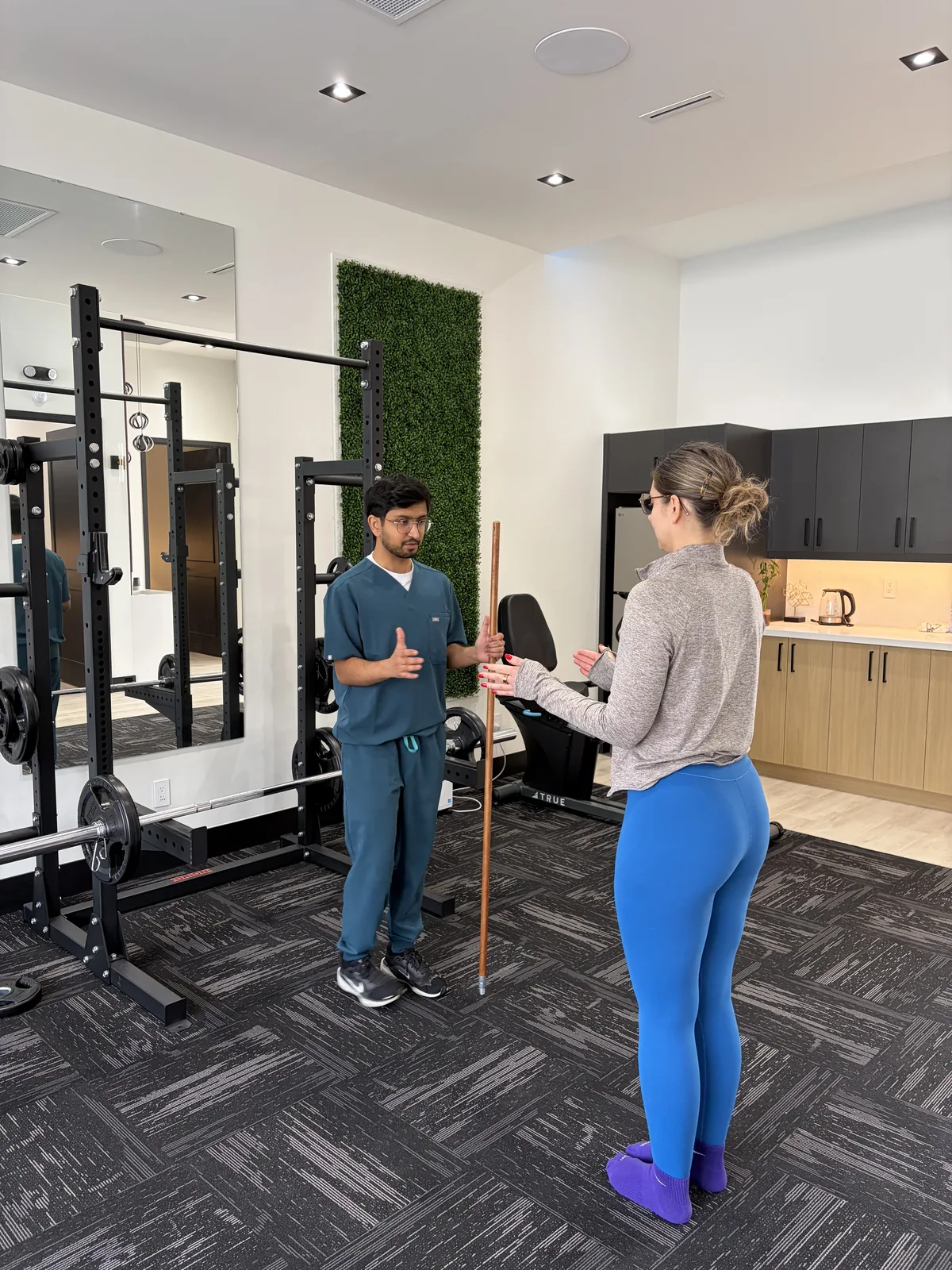
Low Back Pain Physiotherapy in Ancaster and Hamilton
One on one physiotherapy that finds the cause of your back pain and gives you a clear plan.
Do You Recognize These Symptoms?
When to seek immediate care:
If you experience sudden loss of bladder or bowel control, progressive weakness in both legs, or numbness in the saddle area, seek emergency medical attention immediately. These may indicate cauda equina syndrome, a rare but serious condition.
If any of these sound familiar, you don't have to keep living with it.
Book OnlineThe Evidence Is Clear: Physiotherapy Works for Low Back Pain
Back pain is one of the most common reasons Canadians seek physiotherapy, and one of the most treatable. Whether you're dealing with a sudden injury, a nagging ache that won't go away, or recurring flare-ups, physiotherapy can identify the root cause and give you the tools to recover fully and prevent future episodes.
A 2017 Cochrane systematic review found that exercise therapy significantly reduces pain and improves function in chronic low back pain patients compared to no treatment or usual care. The Annals of Internal Medicine (AIM) published evidence supporting spinal manipulation and exercise as effective first-line treatments.
"The American College of Physicians (ACP) recommends non-pharmacologic treatment as first-line therapy for acute and chronic low back pain, including superficial heat, massage, acupuncture, and spinal manipulation."
. Qaseem et al., Annals of Internal Medicine, 2017
At Interlink Physiotherapy, every treatment we provide aligns with current clinical guidelines. We don't guess, we follow the evidence.
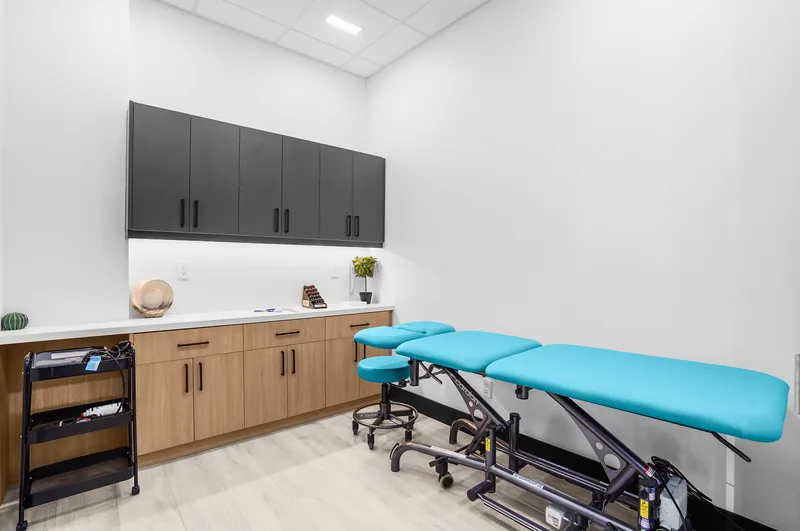
Real Patients, Real Recovery
T. Levterova
Back pain
"I started coming because of severe back pain. The clinic is clean, new, and modern. The staff is very caring and the treatment plan Dhiman gave me was very effective."
Harsh P.
Back pain
"Came here for a lower back issue that had been nagging me for a while. What I appreciated most is Dhiman didn’t just treat the pain — he actually explained what was going on with my back and why it was happening. The focus was on strengthening it so it doesn’t keep coming back, not just quick relief. I left each session actually understanding my body better. Would definitely recommend if you’re dealing with back pain in Hamilton."
Chris J.
The experience
"Very thorough assessment. I am very pleased with the attention to details and help recieved from this clinic. Very clean, welcoming environment. Friendly and helpful staff. Would definitely recommend to anyone."
How We Treat Low Back Pain
Thorough Assessment
We perform a comprehensive full-body assessment to identify the true source of your pain, whether it's a disc herniation pressing on a nerve, tight hip flexors creating lumbar strain, or a facet joint irritation from poor posture.
Personalized Treatment Plan
Based on your assessment findings, we create a clear, step-by-step plan with specific milestones. You'll know exactly what we're doing, why we're doing it, and how long recovery should take.
Hands-On Manual Therapy
Joint mobilization, soft tissue release, and nerve mobilization techniques to reduce pain, restore mobility, and improve spinal alignment. Most patients feel meaningful relief within the first few sessions.
Patient Education
We explain your condition in plain language and teach you why each exercise matters. Research shows that patients who understand their condition recover faster and have fewer recurrences (Pain, 2011).
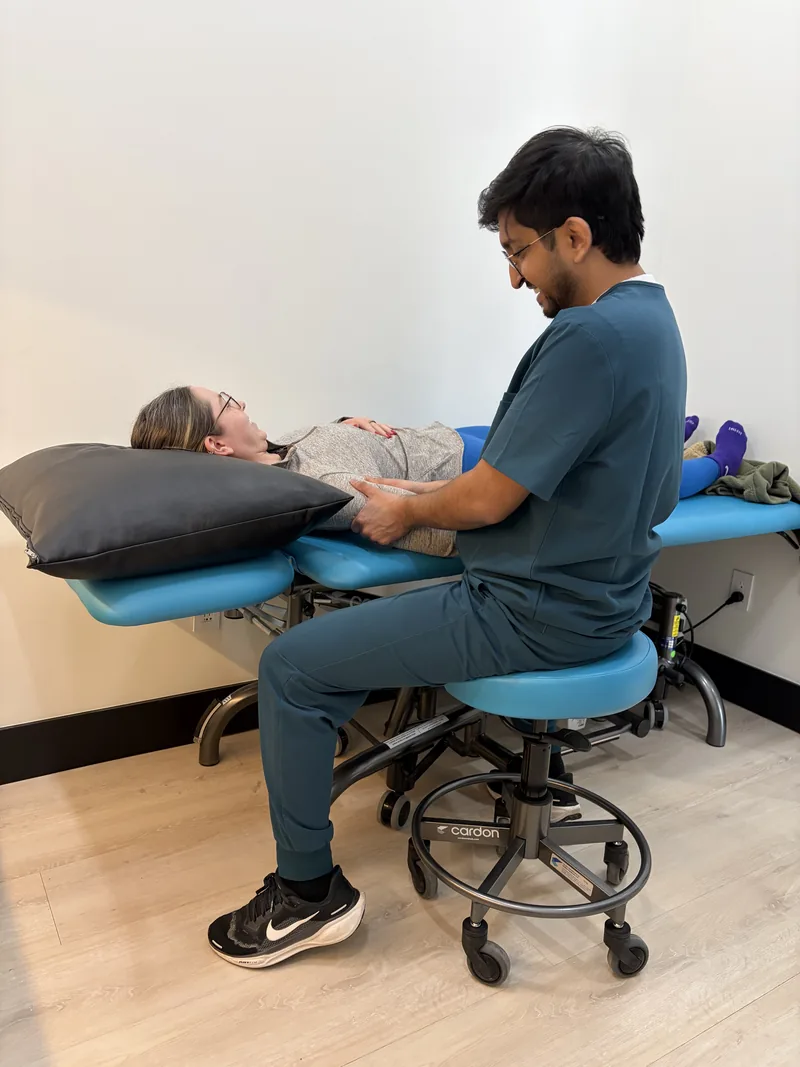
Dhiman Patel, MScPT · Registered Physiotherapist
Your Path to Recovery
Book Online
Schedule your 60-minute initial assessment online. No referral needed. We'll have you in within the week.
Get Your Personalized Plan
Your physiotherapist performs a thorough assessment, explains exactly what's causing your pain, and builds a clear treatment plan with specific milestones.
Start Your Recovery
Begin hands-on treatment and targeted exercises. Most patients feel meaningful improvement within the first few sessions.
Physiotherapy vs. Other Options
The ACP recommends non-pharmacologic treatment as first-line therapy for low back pain. Here's how physiotherapy compares.
Physiotherapy
RecommendedBenefits
Addresses root cause, builds long-term resilience, a very low risk of side effects, ACP-recommended first-line treatment
Limitations
Requires active participation and multiple sessions
Medication
Benefits
Quick symptom relief for acute flare-ups
Limitations
Does not address underlying cause, risk of dependency, side effects (GI, liver, kidney)
Surgery
Benefits
May be necessary for severe structural issues (e.g., large disc herniation with neurological deficit)
Limitations
Invasive, long recovery, risk of complications, often not superior to conservative care for most back pain
Rest Alone
Benefits
Appropriate for first 24-48 hours of acute injury
Limitations
Prolonged rest worsens outcomes, deconditioning, stiffness, and delayed recovery
Frequently Asked Questions
Recovery timelines vary depending on the severity and chronicity of your condition. Many patients with acute low back pain see significant improvement within 4-6 sessions. Chronic conditions may require 8-12 sessions. During your initial assessment, your physiotherapist will give you a realistic timeline based on your specific situation.
Related Conditions
Sciatica
Nerve pain radiating from the lower back through the buttock and down the leg. Often caused by disc herniation or spinal stenosis.
Learn moreHip Pain
Pain in or around the hip joint that can refer to the lower back. Common causes include bursitis, labral tears, and osteoarthritis.
Learn moreNeck Pain
Upper spine pain that often coexists with lower back pain due to shared postural and movement dysfunction patterns.
Learn moreClinically reviewed by Dhiman Patel, MScPT, Registered Physiotherapist. Updated September 2026.
References
- Qaseem A, et al. Noninvasive Treatments for Acute, Subacute, and Chronic Low Back Pain: A Clinical Practice Guideline From the American College of Physicians. Ann Intern Med. 2017;166(7):514-530.
- Hayden JA, et al. Exercise therapy for chronic low back pain. Cochrane Database Syst Rev. 2021;9:CD009790.
- Chou R, et al. Diagnosis and treatment of low back pain: a joint clinical practice guideline from the ACP and APS. Ann Intern Med. 2007;147(7):478-491.
- Paige NM, et al. Association of Spinal Manipulative Therapy With Clinical Benefit and Harm for Acute Low Back Pain. JAMA. 2017;317(14):1451-1460.
- Louw A, et al. The effect of neuroscience education on pain, disability, anxiety, and stress in chronic musculoskeletal pain. Arch Phys Med Rehabil. 2011;92(12):2064-2075.
- Foster NE, et al. Prevention and treatment of low back pain: evidence, challenges, and promising directions. Lancet. 2018;391(10137):2368-2383.
- Stochkendahl MJ, et al. National Clinical Guidelines for non-surgical treatment of patients with recent onset low back pain or lumbar radiculopathy. Eur Spine J. 2018;27(1):60-75.
- Delitto A, et al. Low back pain: clinical practice guidelines linked to the International Classification of Functioning, Disability, and Health. J Orthop Sports Phys Ther. 2012;42(4):A1-57.
- Moseley GL, Butler DS. Fifteen Years of Explaining Pain: The Past, Present, and Future. J Pain. 2015;16(9):807-813.