
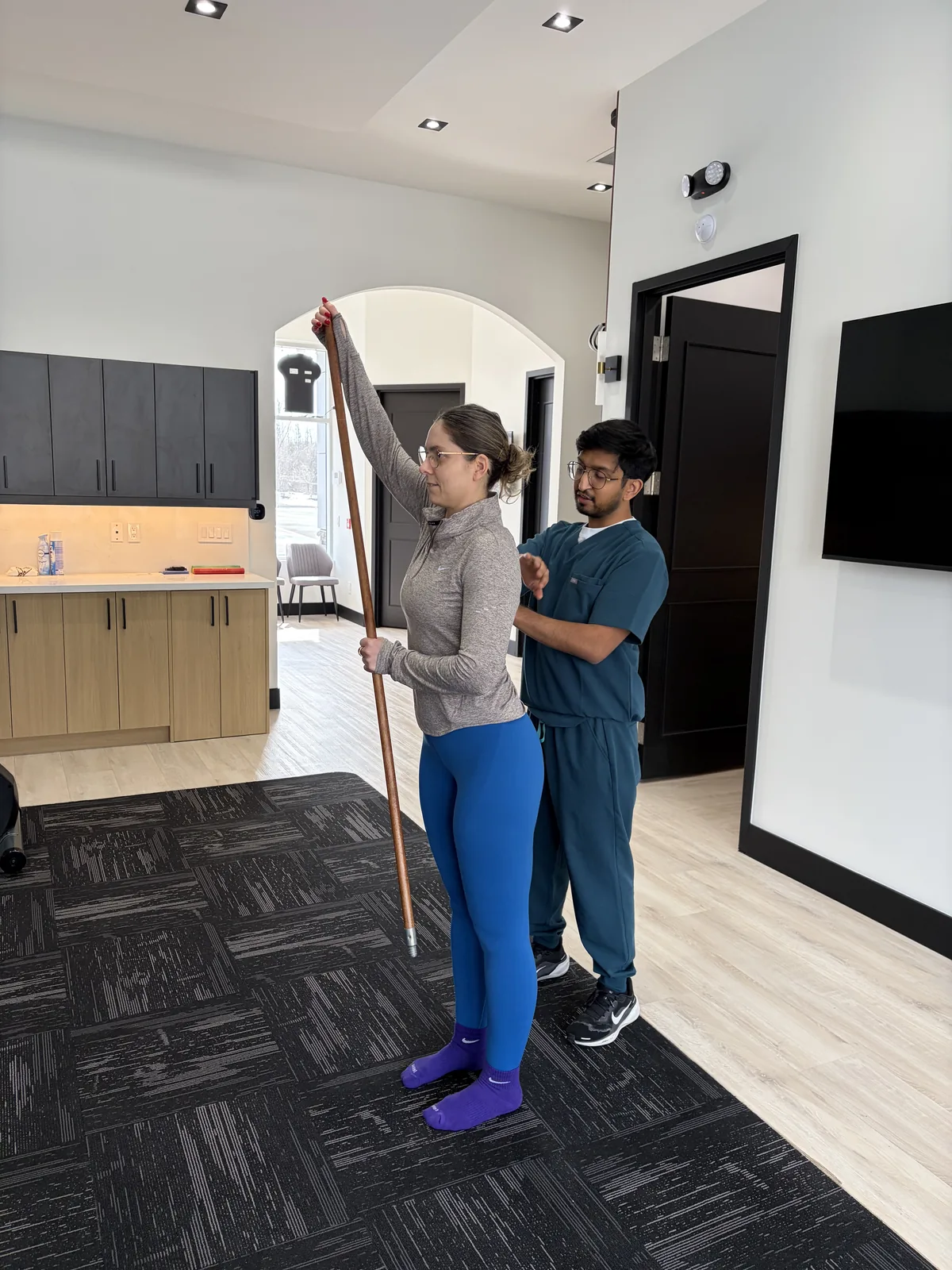
Guided recovery, step by step
Concussion Physiotherapy in Hamilton and Ancaster
Modern concussion care is active. After a short rest window, the path back to school, work and sport runs through graded activity, the neck and the balance system. We guide every step.
No referral needed · Direct billing · MVA and WSIB claims accepted
- 4.9 on Google
- No Referral Needed
- Direct Billing Available
- Registered Physiotherapist
- Free Parking
The Dark Room Is Out. Guided Activity Is In.
Canadian concussion guidelines call for 24 to 48 hours of relative rest, then a gradual return to daily life and light exercise as symptoms allow.
Most people improve within about four weeks. When recovery stalls, there is usually a specific, treatable reason. Finding it is what your assessment is for.
Common Concussion Symptoms
Concussion looks different from person to person. Any mix of these after a knock to the head or a whiplash type jolt fits the picture.
Emergency signs come first. A worsening headache, repeated vomiting, seizure, growing confusion, weakness, slurred speech or unequal pupils need the emergency department, before any physiotherapy. A new suspected concussion should always be assessed by a physician or nurse practitioner.
What Concussion Physiotherapy Involves
Concussion recovery has moving parts, and treatment works when it targets the right ones. Your assessment checks each system that can keep symptoms going.
Graded exercise. We find the activity level your system tolerates today, then build it up steadily. Aerobic exercise below the symptom threshold supports recovery rather than threatening it.
The neck. The same forces that concuss the brain strain the neck, and a strained neck produces headaches and dizziness of its own. Hands on treatment settles it.
The balance system. Dizziness, motion sensitivity and visual discomfort respond to vestibular rehabilitation, a core part of modern concussion care.
The plan back. School, work, driving, sport. Each has steps, each step has a threshold, and we coach you through them with clear rules for when to push and when to hold.
The Return to Sport Steps
Canadian guidance uses a stepwise return. Each step needs at least 24 hours without a symptom flare before moving on.
| Step | What it looks like |
|---|---|
| 1. Symptom limited activity | Daily routines that do not flare symptoms, after 24 to 48 hours of relative rest |
| 2. Light aerobic exercise | Walking or easy stationary cycling, keeping intensity comfortable |
| 3. Sport specific exercise | Running drills, skating, movement without any head impact risk |
| 4. Non contact training | Harder drills, passing, resistance training |
| 5. Full contact practice | Only after medical clearance from a physician or nurse practitioner |
| 6. Return to sport | Normal game play |
Students return to school before returning to sport. We help plan both, with supports that keep symptoms manageable along the way.
Symptoms That Will Not Go Away?
When concussion symptoms last beyond about four weeks, the picture is often called post-concussion syndrome. The name sounds permanent. It is not a life sentence.
Persistent symptoms usually have specific drivers: a deconditioned system that flares with any effort, an untreated neck, a vestibular system still miscalibrated, or an activity pattern that swings between overdoing and shutting down. Each of these is assessable and treatable.
We measure where your thresholds actually are, treat the neck and balance system directly, and rebuild your tolerance step by step. Steady, structured work beats waiting.
Concussion FAQs
Do I need to see a doctor before starting concussion physiotherapy?
A new suspected concussion should be assessed by a physician or nurse practitioner first. That medical assessment rules out anything more serious and confirms the diagnosis.
From there you can book physiotherapy directly, no referral needed. We guide the recovery side: symptoms, exercise levels, the neck, the balance system, and the step by step return to your life.
Should I rest in a dark room after a concussion?
Only very briefly. Current Canadian guidance recommends 24 to 48 hours of relative rest, which means cutting back rather than shutting down. After that, light activity such as walking helps recovery when symptoms allow it.
Long strict rest tends to slow recovery and feed anxiety. Gradual, guided activity is the current standard of care.
How long does concussion recovery take?
For most people symptoms improve within about four weeks. Children and teens often need a little longer than adults.
When symptoms stretch beyond that window, it usually means something specific is keeping them going, such as the neck, the vestibular system or activity levels that are off target. Those drivers are treatable.
What are the return to sport steps?
Canadian guidance uses a stepwise return: brief relative rest, then daily activities, then light aerobic exercise, then sport specific drills, then non contact training, then full contact practice after medical clearance, then game play.
Each step needs at least 24 hours without a symptom flare. We coach you through the steps and pull back the load if symptoms push back.
Why am I still dizzy weeks after my concussion?
Lingering dizziness usually points to the vestibular system or the neck rather than the brain injury itself. Both respond to targeted treatment.
We test both at your assessment. Vestibular exercises retrain the balance system, and hands on treatment settles the neck. Our vestibular physiotherapy page explains the balance side in detail.
Can physiotherapy help post-concussion syndrome?
Yes. When symptoms persist beyond the usual window, care focuses on the specific drivers: graded aerobic exercise below symptom threshold, vestibular rehabilitation, neck treatment and headache management.
Progress tends to come from steady, structured work rather than waiting it out.
I hit my head in a car accident. Is treatment covered?
Yes. Concussion after a collision is treated under Ontario's accident benefits, the same system that covers whiplash. We bill your auto insurer directly and handle the forms.
Concussion and whiplash often travel together after a crash, and we treat both. See our car accident physiotherapy page for how the coverage works.
What about a concussion at work?
Concussions from workplace falls or impacts can be covered through WSIB. We are a WSIB provider and handle the reporting. Our WSIB physiotherapy page walks through the process.
When should my child return to school after a concussion?
School comes before sport. Most students can return within a few days with short term supports such as reduced screen time, breaks and lighter homework loads.
We help families plan the steps and adjust them if symptoms flare, following current Canadian guidance.
What are the danger signs after a head injury?
Go to the emergency department for a worsening headache, repeated vomiting, a seizure, growing confusion or drowsiness, weakness or numbness, slurred speech, or unequal pupils. These need urgent medical care.
Physiotherapy starts after the medical side has cleared anything serious.
Do you do baseline testing or return to sport clearance?
We guide the rehabilitation steps and coordinate with your physician, who provides the medical clearance required before full contact steps.
If you or your team need formal baseline testing, call us at 289-205-8255 and we will point you in the right direction.
Get a Plan for Your Recovery
Concussion assessment and rehabilitation in Ancaster, minutes from the Hamilton Mountain. One on one with a registered physiotherapist. Your first assessment and first treatment are free.
1280 Mohawk Rd #103, Ancaster · Free parking · No referral needed
The information on this page is general and is current as of July 2026. It is not medical advice. A new suspected concussion should be assessed by a physician or nurse practitioner. Recovery guidance reflects the Canadian Guideline on Concussion in Sport, available at parachute.ca.
Reviewed by Dhiman Patel, MScPT, registered with the College of Physiotherapists of Ontario. Last reviewed 29 July 2026.