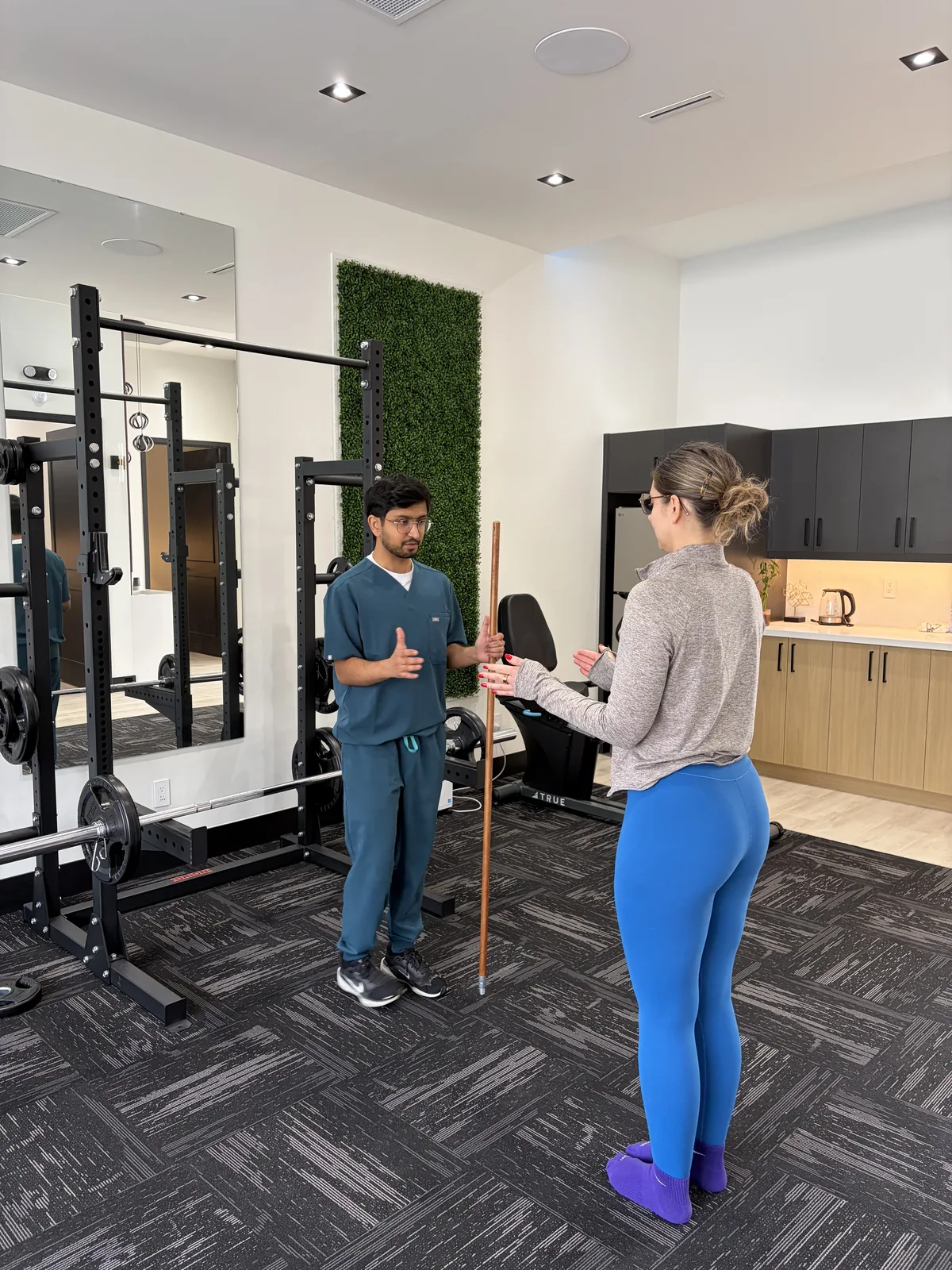
Physiotherapy for IT Band Syndrome in Hamilton & Ancaster
Outer knee pain when you run or cycle? One on one IT band treatment at Interlink Physiotherapy in Ancaster.
Do You Recognize These Symptoms?
IT band syndrome is frustrating. The pain often appears mid-run, forcing you to stop. Recognizing the key symptoms is the first step toward effective treatment.
What the Research Says About IT Band Syndrome
IT band syndrome is the most common cause of lateral knee pain in runners, accounting for up to 12% of all running injuries [1]. It's also one of the most misunderstood.
The old theory was that a "tight" IT band creates friction over the knee. However, modern research shows the IT band is incredibly strong and cannot be meaningfully stretched. The pain doesn't come from friction, but from compression of a small, sensitive fat pad located under the IT band near the knee.
The real cause is almost always poor movement control and weakness in the hip muscles, specifically the gluteus medius [2]. When these muscles are weak, the thigh bone (femur) rotates inward excessively during activities like running, increasing compression on that fat pad. This is why simply resting or foam rolling often fails to provide a long-term solution.
At Interlink Physiotherapy, our treatment is based on this current understanding. We focus on strengthening the hips and improving your movement patterns to address the root cause, not just the symptoms.
Real Patients, Real Words
Alex P.
Google review
"I went for physiotherapy due to knee pain from a running injury. The treatment plan was structured and focused on proper recovery, not just short-term relief. … Highly recommend for sports-related injuries."
Condition: Running injury
Grace T.
Hamilton / Ancaster
"Super helpful and always very friendly! … They are also always on time and I have never had to wait. They’re in the Hamilton/Ancaster area, definitely check them out if you need physio!"
Condition: Ankle injury
C. Najmi
Google review
"Highly recommend. Dhiman and his staff are kind, professional, knowledgeable and accommodating. … The office is well-organized, clean and comfortable. I will be back and recommend my family and friends to visit."
Condition: Knee injury
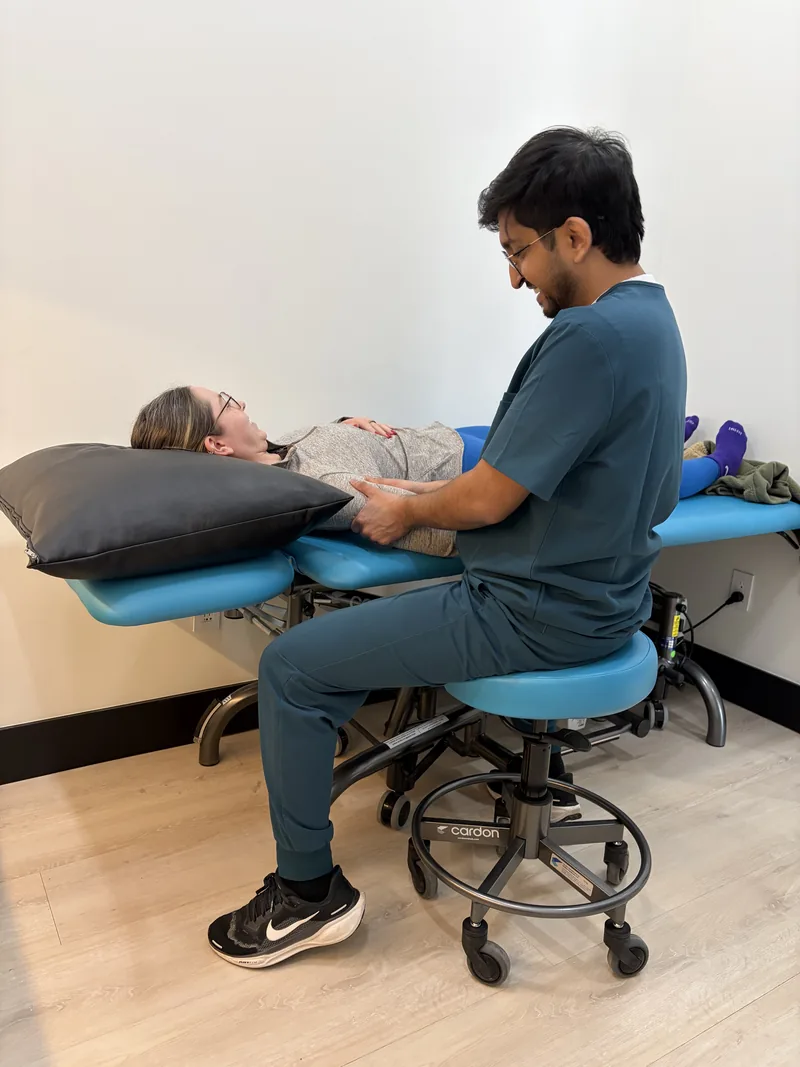
How We Treat IT Band Syndrome
Comprehensive Biomechanical Assessment
We don't just look at your knee. We perform a full-body assessment to analyze your running or cycling mechanics, hip strength, and movement patterns to find the true driver of your IT band pain.
Targeted Hip & Glute Strengthening
The root cause of ITBS is almost always weakness in the hip abductor muscles. We design a progressive exercise program to build strength and stability where it matters most, based on clinical evidence.
Manual Therapy & Load Management
We use hands-on techniques to release tension in associated muscles and provide a clear plan to modify your activity, allowing you to keep training without aggravating the tissue.
Gait Retraining & Education
We teach you how to run or move differently, correcting the patterns that cause friction and overload. Understanding the 'why' behind your pain is key to preventing recurrence.
Your Path to Recovery
We follow a clear, 3-step process to ensure we understand your condition and you understand our plan.
1. Detailed Assessment
We listen to your story and perform a comprehensive physical evaluation, including movement analysis and specific tests to confirm the diagnosis and identify contributing factors from your hips, feet, and core.
2. Clear Diagnosis & Plan
We explain what's causing your pain in simple terms. You'll leave knowing exactly what the problem is, what the treatment plan involves, and how long it will take to get back to your activities pain-free.
3. Hands-On Treatment
Your first session includes initial treatment to provide pain relief and kick-start the recovery process. You will also receive the first set of exercises for your personalized home program.
Your Options, Side by Side
Physiotherapy
Pros: Addresses root cause (hip weakness), builds long-term resilience, supported by strong clinical evidence.
Cons: Requires active participation and consistency with exercises.
Foam Rolling
Pros: May provide temporary relief from symptoms.
Cons: Does not address the underlying cause (hip weakness) and research shows it doesn't change IT band length.
Rest Alone
Pros: Pain may subside temporarily.
Cons: Does nothing to correct the underlying hip weakness and movement patterns, leading to high rates of recurrence.
Stretching
Pros: May feel good, but the IT band is not a contractile tissue and cannot be effectively stretched.
Cons: Ineffective for addressing the root cause and can sometimes irritate the tissue further.
Frequently Asked Questions
Recurrence is almost always because the underlying hip weakness and movement pattern was never addressed, only the local knee symptoms were managed. Rest reduces pain but does nothing to correct the hip mechanics driving the problem. Structured physiotherapy addressing the hip and running pattern is the only way to break the cycle.
Foam rolling the IT band may temporarily reduce symptoms but does not address the cause. Research published in the International Journal of Sports Physical Therapy (2014) found no evidence that foam rolling changes IT band flexibility or tissue properties, consistent with current understanding that the IT band itself is not the primary driver of symptoms.
Most patients see significant improvement within 6-8 weeks of structured physiotherapy addressing hip strength and running mechanics. Full return to unrestricted running typically takes 8-12 weeks. Patients who address the hip weakness and movement pattern comprehensively have significantly lower recurrence rates than those who rely on rest and stretching alone.
Running through pain is not recommended and typically perpetuates the problem. However complete rest is rarely necessary. Your physiotherapist will give you a clear load management plan that allows continued training at a modified level while the hip strengthening program takes effect.
Ready to Start Your Recovery?
Not sure if physiotherapy is right for you? We can help you understand the root cause of your pain and create a plan to get you back to the activities you love.
One on one care · No referral needed · Direct billing available
Our clinic serves Ancaster, Hamilton and Dundas.
Related Conditions
ITBS often co-exists with other lower body issues. Addressing related areas is often key to a full recovery.
Knee Pain
General knee pain can have many causes, often related to biomechanics and muscle imbalances.
Learn MoreHip Pain
Hip weakness is the primary driver of ITBS. Addressing hip function is key to recovery.
Learn MoreRunning Injuries
ITBS is one of the most common running injuries we treat, alongside shin splints and plantar fasciitis.
Learn MoreClinically reviewed by Dhiman Patel, MScPT, Registered Physiotherapist. Updated September 2026.
References
- Louw M, Deary C. The biomechanical variables involved in the aetiology of iliotibial band syndrome in distance runners. Physical Therapy in Sport. 2014.
- Fredericson M, Cookingham CL, Chaudhari AM, et al. Hip abductor weakness in distance runners with iliotibial band syndrome. Clinical Journal of Sport Medicine. 2000.
- Ellis R, Hing W, Reid D. Iliotibial band friction syndrome, a systematic review. Manual Therapy. 2007.
- Noehren B, Davis I, Hamill J. ASB Clinical Biomechanics Award Winner 2006. Clinical Biomechanics. 2007.
- Beers A, Ryan M, Kasubuchi Z, et al. Effects of multi-modal physiotherapy, including hip abductor strengthening, in patients with iliotibial band friction syndrome. Physiotherapy Canada. 2008.