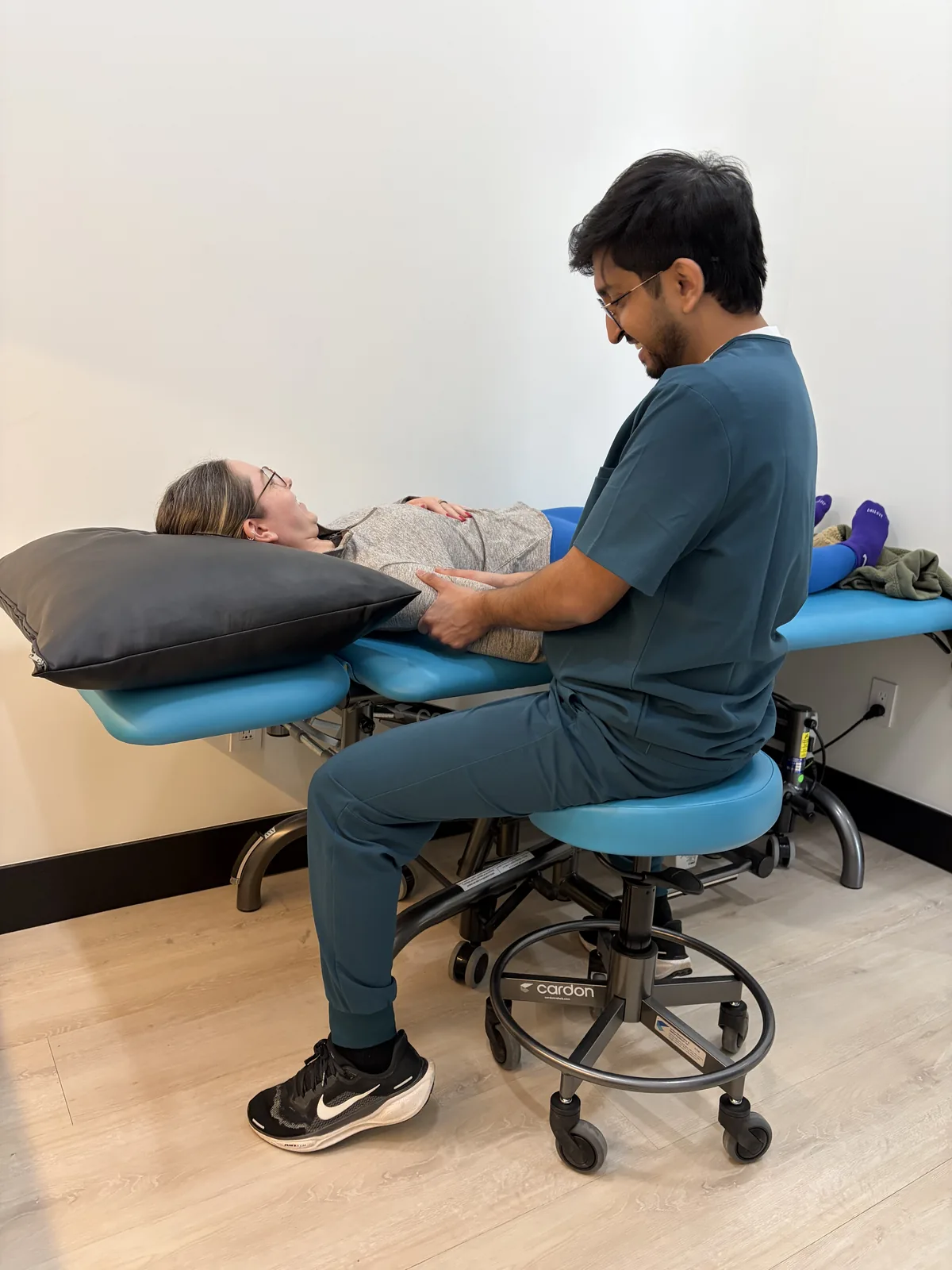
SI Joint Pain Physiotherapy in Ancaster and Hamilton
Pain low in the back or at the top of the buttock? Our physiotherapists assess the sacroiliac joint and treat the cause.
Do You Recognize These Symptoms?
This condition is a common cause of low back pain, but is frequently misdiagnosed. See if these symptoms sound familiar.
What the Research Says About SI Joint Pain
SI joint pain accounts for 15-30% of all chronic low back pain, yet it's often missed. We use a proven diagnostic process to confirm the source of your pain, ensuring your treatment is effective from day one.
Our approach combines hands-on manual therapy to restore joint mobility with a targeted exercise program to build the stability needed for long-term relief. We don't just chase symptoms; we fix the underlying problem.
Book Online
Real Patients, Real Words
"Came here for a lower back issue that had been nagging me for a while. What I appreciated most is Dhiman didn’t just treat the pain — he actually explained what was going on with my back and why it was happening. The focus was on strengthening it so it doesn’t keep coming back, not just quick relief. I left each session actually understanding my body better. Would definitely recommend if you’re dealing with back pain in Hamilton."
Harsh P.
Hamilton
"Very thorough assessment. I am very pleased with the attention to details and help recieved from this clinic. Very clean, welcoming environment. Friendly and helpful staff. Would definitely recommend to anyone."
Chris J.
Google review
"I would highly recommend Interlink for physiotherapy sessions. Dhiman is very knowledgeable and patient, taking the time to fully understand what your issues are and making sure he gets a full picture before beginning treatment. He includes you in setting goals and expectations. His treatments are varied and he explains why we would do each exercise. Furthermore, he would provide exercises or stretches to complete at home. Always felt at ease and comfortable to ask any questions or further clarification on anything discussed. … The space is very clean and the equipment kept in great shape. All staff are very welcoming and friendly making for a great atmosphere for recovery."
Cristovao C.
Google review
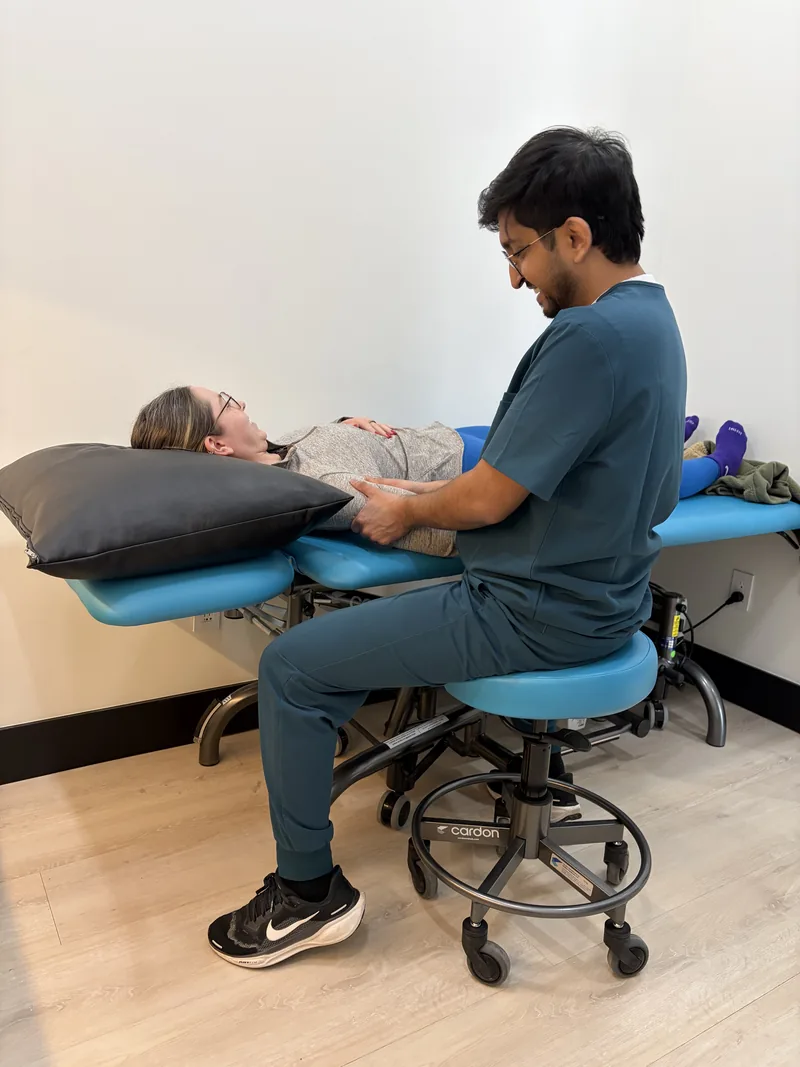
How We Treat SI Joint Pain
Accurate Diagnosis
We use a cluster of validated clinical tests (Laslett, 2005) to accurately diagnose SI joint dysfunction, distinguishing it from lumbar spine or hip issues to ensure your treatment is correctly targeted.
Hands-On Manual Therapy
Targeted manual therapy techniques are used to restore normal joint mechanics, release tight surrounding muscles (like the glutes and piriformis), and reduce pain and inflammation.
Targeted Stabilization Exercises
We prescribe specific exercises to strengthen the deep core and pelvic stabilizing muscles (like the transversus abdominis) that provide crucial support to the SI joint, preventing recurrence (Richardson, 2002).
Your Path to Recovery
We follow a clear, structured process to get you from pain to performance.
Initial Assessment
A deep dive into your symptoms, history, and movement patterns to pinpoint the exact cause of your SI joint pain.
Targeted Treatment
A combination of hands-on therapy to restore joint function and specific exercises to build stability and control.
Long-Term Prevention
We empower you with the knowledge and tools to manage your condition independently and prevent future flare-ups.
Your Options, Side by Side
Many treatments exist for SI joint pain. Here is how the common ones compare.
Physiotherapy
Pros: Addresses the root cause of instability/dysfunction, provides long-term relief, and reduces recurrence risk.
Cons: Requires active patient participation and consistency with exercises.
Cortisone Injections
Pros: Can provide powerful short-term pain and inflammation relief.
Cons: Does not fix the underlying mechanical issue; pain often returns. Not a long-term solution.
Rest & Avoidance
Pros: May temporarily reduce acute pain.
Cons: Leads to deconditioning, muscle weakness, and increased joint instability, often worsening the problem over time.
Frequently Asked Questions
Clinical differentiation requires a thorough assessment. SI joint pain is typically more lateral and buttock-dominant, worsens with single-leg loading, and is reproduced by specific provocation tests. Lumbar pain is often more central and related to spinal movements. A physiotherapist can accurately diagnose the source.
Related Conditions
Pain in the pelvic region is complex. Your SI joint issue might be related to or confused with these other conditions.
Clinically reviewed by Dhiman Patel, MScPT, Registered Physiotherapist. Updated September 2026.
References
- Sembrano JN, Polly DW Jr. How often is low back pain not coming from the back?. Spine (Phila Pa 1976). 2009;34(1):E27-E32.
- Laslett M, Aprill CN, McDonald B, Young SB. Diagnosis of sacroiliac joint pain: validity of individual provocation tests and composites of tests. Man Ther. 2005;10(3):207-218.
- Vleeming A, Albert HB, Ostgaard HC, Sturesson B, Stuge B. European guidelines for the diagnosis and treatment of pelvic girdle pain. Eur Spine J. 2008;17(6):794-819.
- Richardson CA, Snijders CJ, Hides JA, Damen L, Pas MS, Storm J. The relation between the transversus abdominis muscles, sacroiliac joint mechanics, and low back pain. Spine (Phila Pa 1976). 2002;27(4):399-405.