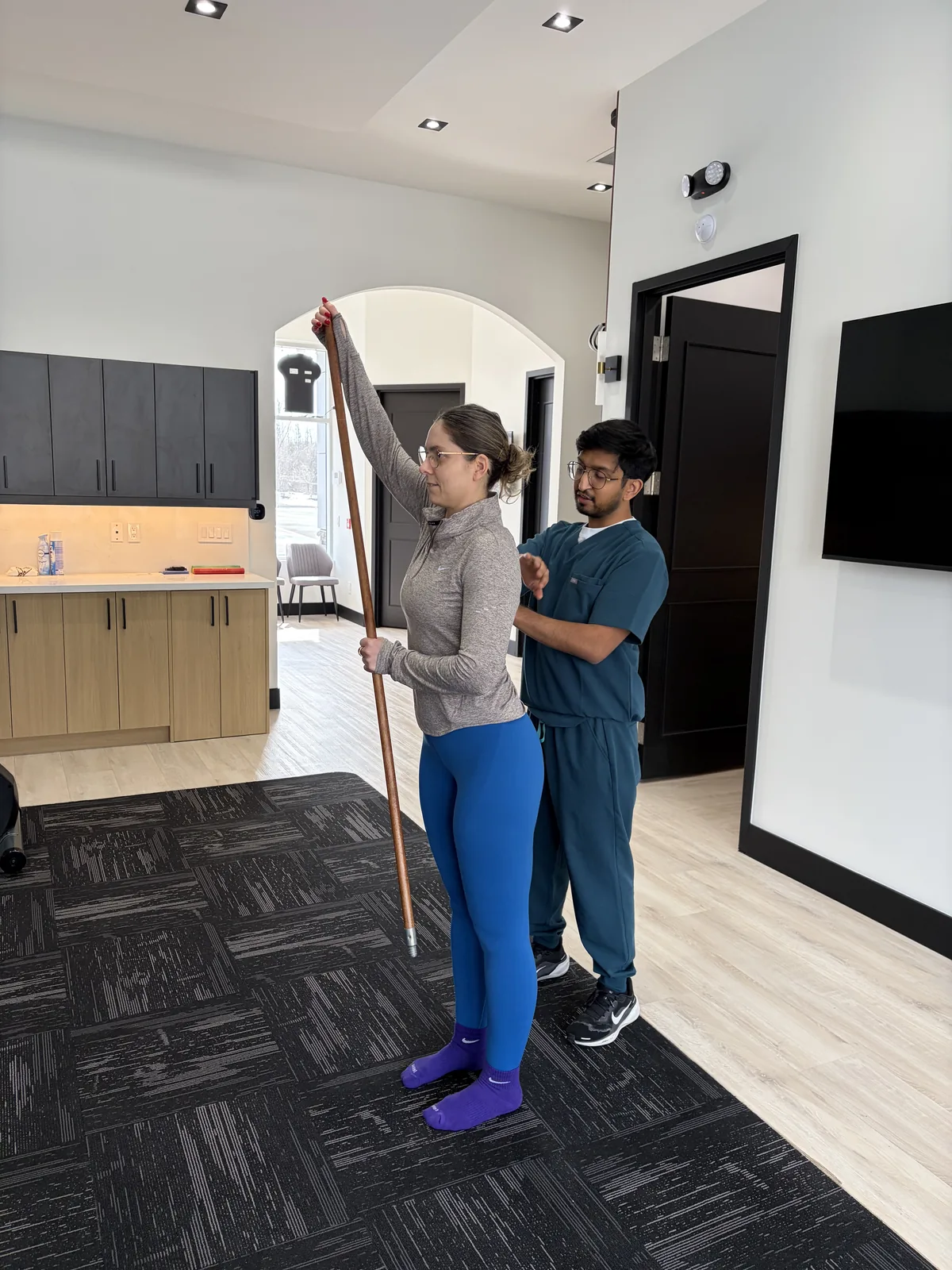
Physiotherapy for Frozen Shoulder in Ancaster & Hamilton
Stiff, painful shoulder? Frozen shoulder moves through stages. We match treatment to the stage you are in and help you keep the movement you regain.
Do You Recognize These Symptoms?
Frozen shoulder follows a distinct pattern of pain and progressive stiffness. See if these symptoms match your experience.
Progressive, deep, aching shoulder pain
Significant pain at night that disrupts sleep
Increasing stiffness and loss of shoulder movement
Inability to raise arm overhead or behind your back
Difficulty with daily activities like dressing or reaching
Pain when trying to move the shoulder suddenly
Loss of both active and passive range of motion
Pain radiating from the outer shoulder area
What the Research Says About Frozen Shoulder
Frozen shoulder, or adhesive capsulitis, is a painful condition where the connective tissue surrounding your shoulder joint (the capsule) becomes thick, stiff, and inflamed. This leads to severe pain and a dramatic loss of movement.
While it can feel debilitating, the prognosis is good with the right approach. Research in the Journal of Shoulder and Elbow Surgery confirms that while the condition affects 2-5% of adults, structured physiotherapy is key to a faster, more complete recovery.
Our treatment plan is designed to work with the natural phases of the condition, gently restoring mobility during the painful 'freezing' phase and progressing to more active stretching in the 'frozen' and 'thawing' phases to accelerate your return to normal function.

Real Patients, Real Words
Copied word for word from Google. A … means part of a longer review is left out.
T. Bucalo
Google review - Shoulder & elbow
"I chose Interlink Physiotherapy based on glowing reviews and found them fully deserved. My doctor referred me for persistent shoulder pain spanning several months, which an ultrasound diagnosed as bursitis and tendinitis. Dhiman patiently outlined my recovery expectations and timeline, while attentively addressing my concurrent elbow injury. …"
Ashley F.
Google review - Shoulder & elbow
"My experience it interlink physiotherapy has been excellent. Dhiman Patel is very professional, knowledgeable, and supports his patients needs. …"
Chris J.
Google review - Shoulder & elbow
"Very thorough assessment. I am very pleased with the attention to details and help recieved from this clinic. Very clean, welcoming environment. Friendly and helpful staff. Would definitely recommend to anyone."
How We Treat Frozen Shoulder
Accurate Diagnosis & Staging
We conduct a detailed assessment to confirm adhesive capsulitis, differentiate it from other conditions like rotator cuff tears, and determine your current stage (freezing, frozen, or thawing) to guide treatment intensity.
Pain & Inflammation Control
In the initial 'freezing' stage, we use gentle, pain-free range of motion exercises and mobilizations to modulate pain and prevent excessive capsular contracture, avoiding aggressive stretching that can worsen inflammation.
Progressive Mobility Restoration
As you move into the 'frozen' and 'thawing' stages, we introduce more targeted manual therapy and specific stretching protocols to systematically restore your shoulder's full range of motion.
Strength & Functional Recovery
Once mobility improves, we build a targeted strengthening program to restore normal shoulder mechanics and function, ensuring you can return to all your daily activities without limitation.
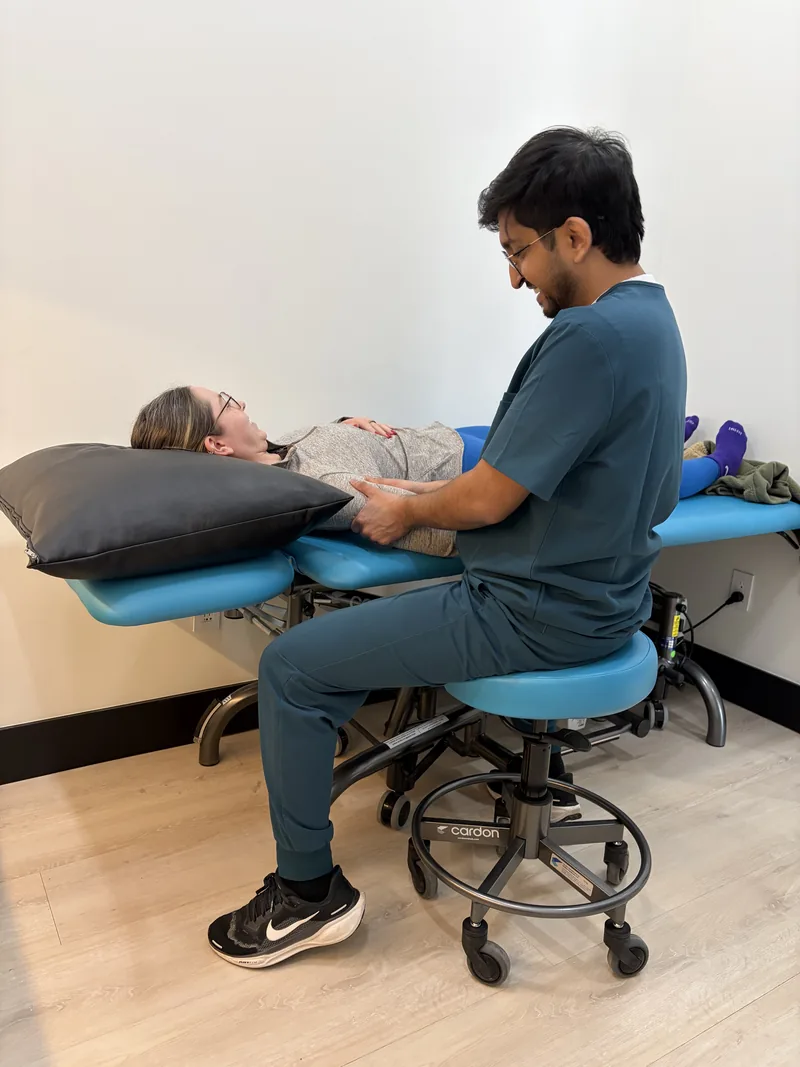
Your Path to Recovery
We follow a clear, structured process to ensure you get the best results.
Initial Assessment
A one-on-one session to diagnose your condition, identify the stage of your frozen shoulder, and establish a baseline for your mobility and pain.
Personalized Treatment
A series of sessions involving hands-on manual therapy and guided exercises tailored to your specific stage of recovery.
Long-Term Prevention
As you recover, we provide you with a home exercise program and education to restore full function and reduce the risk of recurrence.
Your Options, Side by Side
When dealing with frozen shoulder, you have options. Here is how the common ones compare.
Physiotherapy
Pros: Addresses root cause (capsular stiffness), restores long-term mobility, evidence-based, avoids injections/surgery.
Cons: Requires consistent participation over several months.
Corticosteroid Injections
Pros: Can provide good short-term pain relief in the acute 'freezing' stage.
Cons: Does not resolve the underlying stiffness; effect is often temporary. Does not change the natural history of the condition.
Ignoring It
Pros: Condition may eventually resolve on its own.
Cons: Takes significantly longer (1-3 years vs 6-12 months with physio) and often results in permanent loss of motion.
Surgery (Capsular Release)
Pros: Effective for severe, persistent cases that fail conservative treatment.
Cons: Invasive, carries surgical risks, requires extensive post-op rehabilitation.
Frequently Asked Questions
With structured physiotherapy, most patients achieve significant functional recovery within 6-12 months, significantly faster than the 1-3 year natural history. A randomised controlled trial in Physical Therapy (2000) found that patients receiving structured physiotherapy recovered shoulder function an average of 7 months faster than those managed with watchful waiting alone.
Related Conditions
Pain and stiffness can be complex. Here are other conditions we treat that are often related to shoulder issues.
Shoulder Pain
General shoulder pain can have many causes. We can help diagnose the specific source of your discomfort.
Learn MoreRotator Cuff Injury
Tears or inflammation of the rotator cuff tendons, often confused with frozen shoulder but requires different treatment.
Learn MoreNeck Pain
Pain from the neck can often refer to the shoulder, and it's important to rule out a cervical spine issue.
Learn MoreClinically reviewed by Dhiman Patel, MScPT, Registered Physiotherapist. Updated September 2026.
References
- Zuckerman JD, Rokito A. Frozen shoulder: a consensus definition. Journal of Shoulder and Elbow Surgery. 2011.
- Page MJ, Green S, Kramer S, et al. Manual therapy and exercise for adhesive capsulitis (frozen shoulder). Cochrane Database of Systematic Reviews. 2014.
- Buchbinder R, Youd JM, Green S, et al. Efficacy and cost-effectiveness of physiotherapy following glenohumeral joint distension for adhesive capsulitis. Arthritis and Rheumatism. 2007.
- Rangan A, Hanchard N, McDaid C. What is the most effective treatment for frozen shoulder? BMJ. 2016.
- Vermeulen HM, Rozing PM, Obermann WR, et al. Comparison of high-grade and low-grade mobilization techniques in the management of adhesive capsulitis. Physical Therapy. 2006.
All references can be independently verified at pubmed.ncbi.nlm.nih.gov