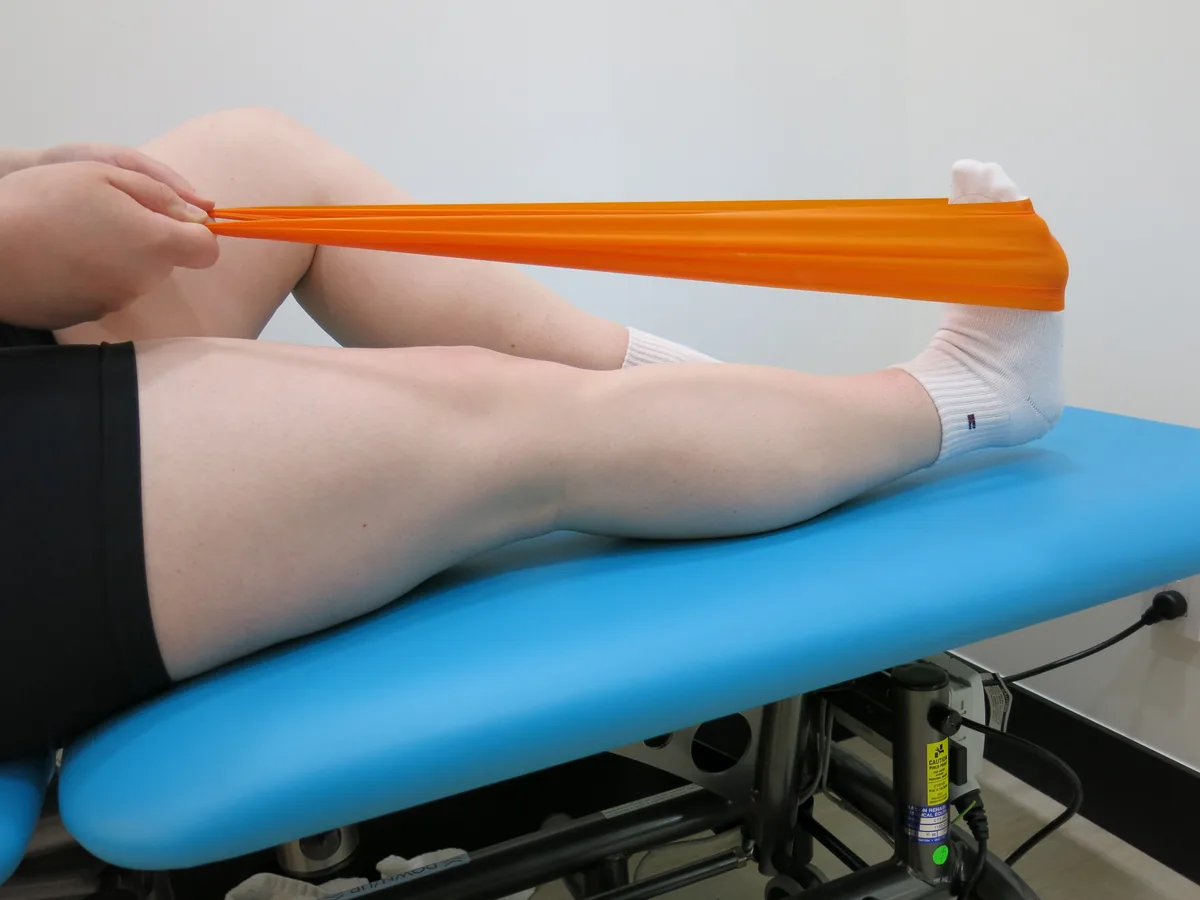
Plantar Fasciitis Physiotherapy in Hamilton & Ancaster
Sharp heel pain with your first steps in the morning? Plantar fasciitis treatment in Ancaster and Hamilton that treats the cause.
Do You Recognize These Symptoms?
Plantar fasciitis has a distinctive pattern. If you're experiencing any of the following, physiotherapy can help.
The Evidence Is Clear: Physiotherapy Works for Plantar Fasciitis
Plantar fasciitis affects approximately 10% of the population at some point. The good news: it responds very well to evidence-based physiotherapy. A systematic review in the British Journal of Sports Medicine found that progressive loading exercises produce superior long-term outcomes compared to stretching, orthotics, or injection alone.
Research published in the Scandinavian Journal of Medicine & Science in Sports demonstrated that high-load strength training of the plantar fascia produced faster recovery and better outcomes at 12 months compared to traditional stretching protocols.
At Interlink Physiotherapy, we combine progressive loading with manual therapy and biomechanical correction to help you recover fully and as quickly as your body safely allows.
Book Online
Real Patients, Real Recovery
We help people in Ancaster and Hamilton get back on their feet, pain-free.
Haley E.
Google review - Workplace injury
"I came in with a workplace injury on my foot and was having trouble with mobility and pain. Dhiman was incredibly professional and passionate with his approach on my care plan. Over the weeks he helped me improve my pain and mobility allowing me to get back to full hours and duties on my job. I highly recommend him since he takes the time to listen and explain things clearly so we as clients can understand the injury and process on healing. Thank you for much for getting me back to myself."
Grace T.
Hamilton / Ancaster - Ankle injury
"Super helpful and always very friendly! Went here for an ankle injury and found lots of improvement in the time I was here. They are also always on time and I have never had to wait. They’re in the Hamilton/Hamilton / Ancaster area, definitely check them out if you need physio!"
Alex P.
Google review - Running injury
"I went for physiotherapy due to knee pain from a running injury. The treatment plan was structured and focused on proper recovery, not just short-term relief. My pain has reduced significantly, and I’m now able to run comfortably again. Highly recommend for sports-related injuries."
How We Treat Plantar Fasciitis
We follow a systematic, evidence-based approach to resolve your heel pain and prevent it from returning.
Thorough Biomechanical Assessment
We assess your foot mechanics, ankle mobility, calf flexibility, hip strength, and gait pattern to identify the specific factors contributing to your plantar fascia overload.
Progressive Loading Program
Evidence-based loading exercises for the plantar fascia and calf complex. Research shows that progressive loading, not rest, is the most effective long-term treatment for plantar fasciitis.
Manual Therapy & Soft Tissue Work
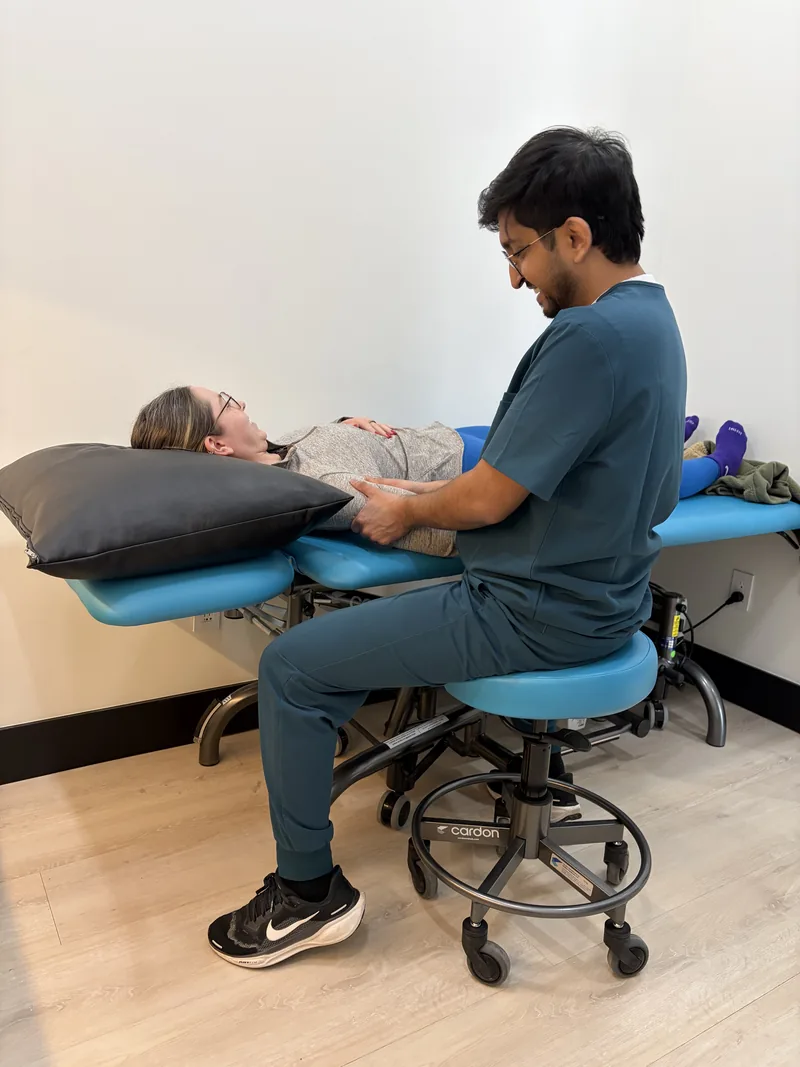
Hands-on treatment to improve ankle and foot mobility, reduce calf tightness, and address trigger points that contribute to plantar fascia irritation.
Load Management & Education
Guidance on activity modification, footwear, and a structured return to full activity. We help you understand why the pain developed and how to prevent it from returning.
Your Path to Recovery
Here's what your treatment will look like as we work to eliminate your heel pain.
Session 1: Assessment
A thorough evaluation of your foot mechanics, ankle mobility, calf flexibility, and gait. You'll leave with a clear diagnosis and a structured treatment plan.
Sessions 2-4: Pain Reduction
Manual therapy, initial loading exercises, and activity modification to reduce irritation and begin the healing process. Most patients notice improvement within the first few sessions.
Sessions 5+: Strengthening
Progressive loading to build plantar fascia and calf strength, address contributing factors, and ensure you can return to full activity without recurrence.
Physiotherapy vs. Other Options
Many treatments exist for plantar fasciitis, but the evidence is clear on what works best long-term.
Physiotherapy
Pros: Addresses root biomechanical causes, provides long-term relief through progressive loading, non-invasive, evidence-based first-line treatment.
Cons: Requires consistency with home exercises over several weeks.
Cortisone Injection
Pros: Can provide short-term pain relief (weeks).
Cons: Does not address the underlying cause. Multiple studies show effects are short-lived and may weaken the plantar fascia, increasing rupture risk.
Orthotics Alone
Pros: May provide symptom relief by redistributing load.
Cons: Does not strengthen the plantar fascia or address calf/hip weakness. Best used as an adjunct to active rehabilitation, not a standalone treatment.
Frequently Asked Questions
With structured physiotherapy, most patients see significant improvement within 6-12 weeks. Research shows that progressive loading programs produce better long-term outcomes than passive treatments like rest, orthotics, or injection alone. Consistency with your home exercise program is the most important factor in recovery speed.
Complete rest is not recommended. While you may need to temporarily reduce high-impact activities, the plantar fascia needs progressive loading to heal and strengthen. Prolonged rest leads to deconditioning and often makes the problem worse when you return to activity.
Not necessarily. Research shows that off-the-shelf arch supports can be equally effective as custom orthotics for most cases of plantar fasciitis. More importantly, orthotics should be used alongside, not instead of, a progressive loading and strengthening program.
No. While heel spurs are often found on imaging in people with plantar fasciitis, they are rarely the cause of pain. Many people have heel spurs with no symptoms at all. Treatment should focus on the plantar fascia and contributing biomechanical factors, not the spur itself.
Related Conditions
Achilles Tendinopathy
Calf tightness and Achilles tendon dysfunction frequently contribute to plantar fascia overload.
Running Injury
Plantar fasciitis is one of the most common running injuries. We provide comprehensive return-to-run programs.
Knee Pain
Altered gait from plantar fasciitis can lead to compensatory knee pain. We address the full kinetic chain.
Clinically reviewed by Dhiman Patel, MScPT, Registered Physiotherapist. Updated September 2026.
References
- Rathleff MS, Molgaard CM, Fredberg U, et al. High-load strength training improves outcome in patients with plantar fasciitis: A randomized controlled trial. Scandinavian Journal of Medicine & Science in Sports. 2015;25(3):e292-e300.
- Babatunde OO, Legha A, Littlewood C, et al. Comparative effectiveness of treatment options for plantar heel pain: a systematic review with network meta-analysis. British Journal of Sports Medicine. 2019;53(3):182-194.
- David JA, Sankarapandian V, Christopher PR, et al. Injected corticosteroids for treating plantar heel pain in adults. Cochrane Database of Systematic Reviews. 2017.
- Martin RL, Davenport TE, Reischl SF, et al. Heel pain, plantar fasciitis: revision 2014. Clinical practice guidelines. Journal of Orthopaedic & Sports Physical Therapy. 2014;44(11):A1-A33.
All references can be independently verified at pubmed.ncbi.nlm.nih.gov