
Conditions we treat
Physiotherapy for Mid Back and Thoracic Pain
Stiffness between the shoulder blades, aching after long hours at a desk, or a rib that catches when you breathe in deeply. Your first assessment and treatment are free.
No referral needed · Direct billing · Free parking at the door
- 4.9 on Google
- No Referral Needed
- Direct Billing Available
- Registered Physiotherapist
- Free Parking
Do You Recognize These Symptoms?
Thoracic pain sits in the mid back, the part your ribs attach to. These are the patterns we see most often.
When to seek immediate care. Chest pain, shortness of breath, or pain spreading to the jaw or arm needs urgent medical attention. So does pain after a significant fall or crash, unexplained weight loss or fever, and any numbness or weakness in your legs. If you are unsure, call us and we will help you work out the right next step.
If any of this sounds familiar, you do not have to keep living with it.
What the Research Says About Mid Back Pain
Most thoracic pain is mechanical. It comes from joints, ribs, muscles and how you move, and it responds well to the right treatment.
Clinical guidelines for spinal pain consistently point the same way. Hands on treatment helps settle symptoms early, and exercise is what keeps the problem from returning. Guidelines also advise against routine imaging for mechanical spinal pain, because scans commonly show age related changes that are not causing the symptoms.
At Interlink, treatment follows that evidence. You get an assessment that finds the cause, hands on treatment that starts the same visit, and an exercise plan built for your day.
What Causes Thoracic Back Pain
Long periods in one position
Desk work, driving, and looking down at a phone. The issue is holding any single position for a long time rather than the position itself.
Joint and rib stiffness
The small joints of the mid back and the joints where ribs attach can become stiff and sensitive, which makes deep breaths and twisting uncomfortable.
Muscle strain
Lifting something awkward, a sudden twist, or a heavy training session can strain the muscles around the shoulder blade.
Weakness through the upper back
When the muscles supporting the shoulder blades tire quickly, everything else works harder and starts to ache.
Referred pain
Neck and shoulder problems can both refer pain into the mid back, which is why the assessment covers more than the sore spot.
After an injury
A fall, a collision, or a sports impact can leave the mid back and ribs painful and guarded for a while.
How We Treat It
Assess
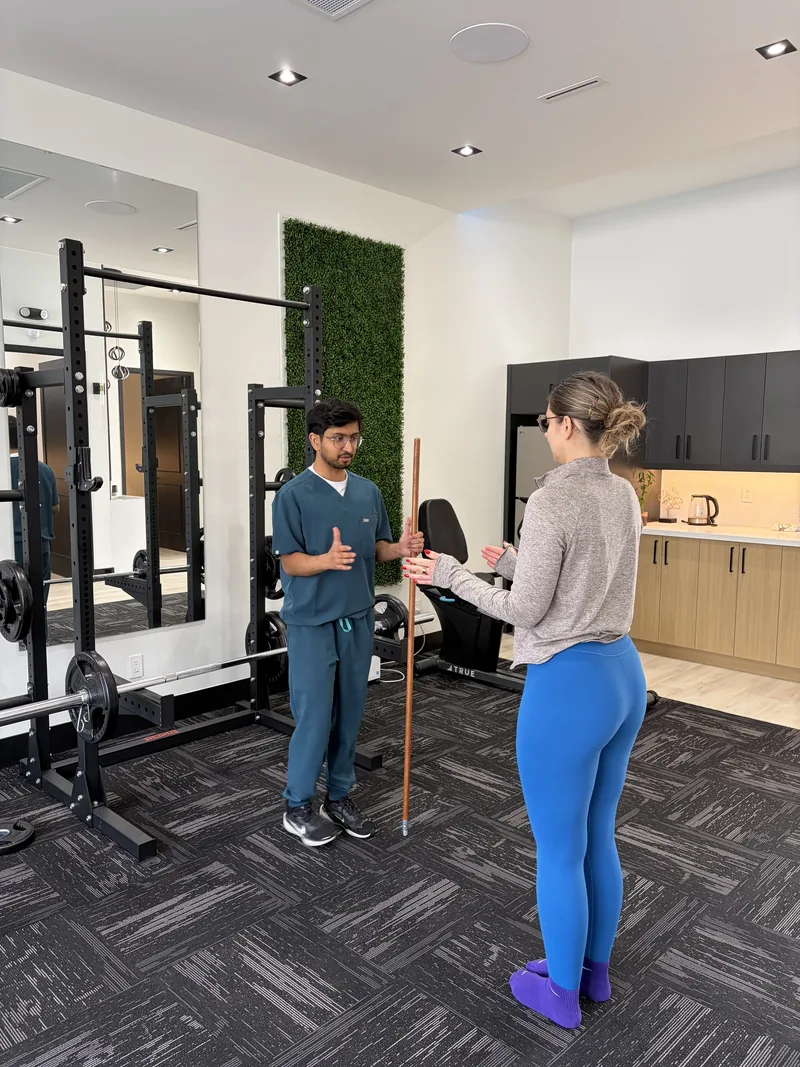
Dhiman checks how your mid back, ribs, neck and shoulders move together, then works out which part is driving your symptoms.
Settle it down
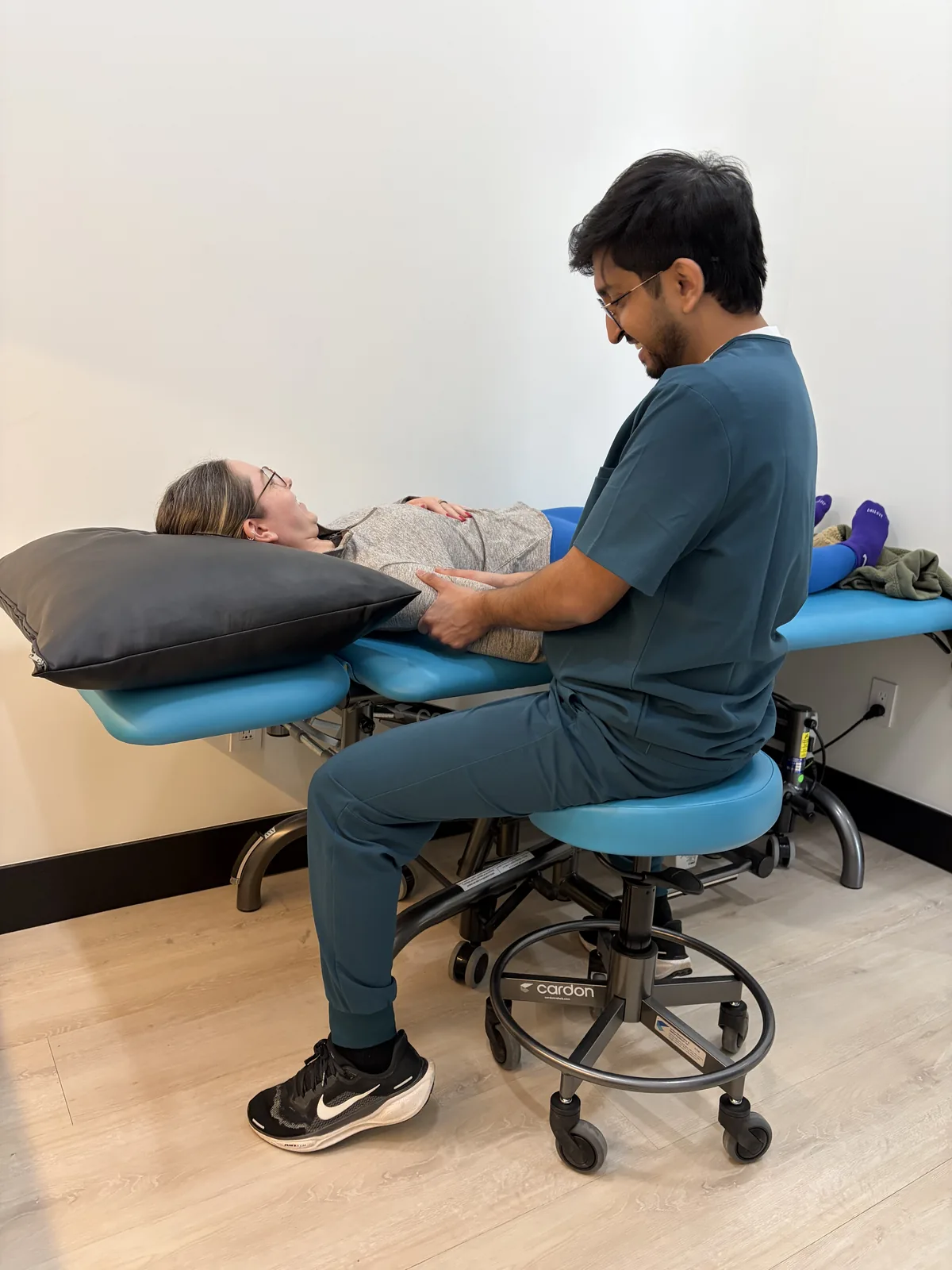
Manual therapy to free stiff joints in the mid back and ribs, and to ease irritated muscle. Most people notice a change in how they move fairly quickly.
Build it back
Exercise to restore rotation and extension, then strength work for the muscles supporting your shoulder blades. This is what stops it returning.
We also look at what triggered it in the first place, which usually means practical changes to your desk, your breaks, or your training.
Mid Back Pain FAQs
What causes pain between the shoulder blades?
The most common cause is the mid back and rib joints getting stiff and irritated, usually after long hours in one position. Muscles around the shoulder blade then work harder and start to ache.
Other causes include a strain from lifting or twisting, an old injury flaring up, or a rib joint that has become sensitive. Sometimes neck problems refer pain down into this area.
Pain here is very rarely dangerous. It does need a proper assessment so treatment targets the right thing.
Is mid back pain serious?
Most mid back pain is mechanical, which means it comes from joints, muscles and how you move. It usually settles with the right treatment.
Some symptoms do need prompt medical review. These include chest pain or shortness of breath, pain after a significant fall or crash, unexplained weight loss, fever, or numbness and weakness in your legs. If you have any of these, see a doctor or go to an emergency department.
How long does thoracic back pain take to settle?
Many people feel a noticeable difference within the first few sessions, especially with stiffness. Building the strength and habits that stop it returning usually takes several weeks.
Recovery time depends on how long the problem has been there, what caused it, and what your day looks like. We measure where you start so you can actually see the change.
Can desk work cause mid back pain?
Long periods in one position are a very common trigger. It is less about sitting up straight and more about how long you hold any single position.
We look at your desk setup, your movement breaks, and the strength of the muscles that support your mid back and shoulder blades.
What does treatment involve?
Hands on treatment to free up stiff joints in the mid back and ribs, and to settle irritated muscle. That usually eases things quickly.
Then exercise to restore movement and build strength through the mid back and shoulder blades, so the problem does not keep coming back. You get a plan you can actually do.
Do I need an X-ray or a scan?
Usually no. For most mid back pain, imaging does not change what treatment is needed, and scans often show normal age related changes that are not the cause of your pain.
If your assessment suggests imaging would be useful, we will tell you and help you take the next step.
Do I need a doctor's referral?
No. In Ontario you can see a physiotherapist directly. Some extended health plans still ask for a referral before they reimburse you, and we can help you check yours.
Is my first visit free?
Yes. New patients get a full assessment and their first treatment at no charge, and we do not bill your insurance for it.
Related pages: neck pain, low back pain, shoulder pain and all conditions we treat.
Get Your Mid Back Assessed
One on one with a registered physiotherapist in Ancaster, minutes from the Hamilton Mountain. Your first assessment and treatment are free.
1280 Mohawk Rd #103, Ancaster · Free parking · No referral needed
This page is general information and is not a diagnosis or a substitute for individual assessment. Reviewed by Dhiman Patel, MScPT, registered with the College of Physiotherapists of Ontario. Last reviewed 26 July 2026.