
Lumbar spinal stenosis
Physiotherapy for Spinal Stenosis
Do your legs hurt or tingle when you walk or stand, then ease when you sit? We work with you on exercise and a walking goal you choose.
Free first visit for new patients · No referral needed · Free parking at the door
- 4.9 on Google
- No Referral Needed
- Direct Billing Available
- Free Parking
- One on One Visits
What Is Lumbar Spinal Stenosis?
Lumbar spinal stenosis means the space for the nerves in your lower back has become narrow. Over the years, wear-related changes in the spine can crowd the nerves.
It becomes more common with age. A 2022 review in JAMA reports that about 1 in 5 people over 60 have narrowing that shows on scans. About 11% of older adults in the US have symptoms from it.
The Classic Sign: Leg Symptoms With Walking
Doctors call this neurogenic claudication, which means leg symptoms from crowded nerves. It often looks like this:
- Pain in your buttocks or legs
- Numbness or tingling in your legs or feet
- Legs that feel tired as you walk or stand
- Symptoms that come on after walking or standing for a while
- Relief when you sit down or bend forward
- Walks that feel easier when you lean on a shopping cart
- Back pain for some people, though others have little or none
- Feeling unsteady on your feet
Other causes of leg pain can look alike, such as sciatica or a disc herniation. Your physiotherapist will check your nerves to sort this out.
Stenosis or a Blood Flow Problem?
Poor blood flow in the legs can also cause leg pain when you walk. The JAMA review notes that this pain usually does not come on from standing still. Stenosis symptoms often do.
In a study of 53 patients, most single signs were weak clues on their own. One pattern pointed strongly to a blood flow problem: calf pain that eased when people simply stood still. If your calf pain eases when you pause and stand still, see your doctor to check your blood flow.
What the Research Says
A 2015 trial (Delitto and others) included 169 adults aged 50 and older who had agreed to surgery. By chance, some had surgery and some had physical therapy. After 2 years, both groups had similar physical function on average. More than half of the physical therapy group (57%) went on to have surgery. The trial had no untreated group, so it can't show how much each one helped.
A 2016 Cochrane review found the studies comparing surgery with non-surgical care were low quality, so it could not say which works better. The 2022 JAMA review lists physical therapy as one of the first treatments to try. It says surgery may suit some people whose pain and limits continue.
The North American Spine Society (NASS) guideline notes that symptoms often ease when you bend forward or sit. Its authors think one-third to one-half of people with mild to moderate stenosis get better over time on their own.
The JAMA review also describes 146 people who did not have surgery. After 3 years, about 1 in 3 said they were better and about half said they were the same. About 10% to 20% said they were worse.
A 2022 review of non-surgical care found moderate-quality evidence for programs that mix exercise with hands on care. For most other treatments, the evidence was too weak to judge.
Exercise Approaches in the Research
Stenosis exercise programs in trials often share a few parts.
Bending-forward exercise
Exercises that gently round the low back are called flexion-based exercise. They were in most programs in a 2024 review of 13 trials with 1,440 people.
Cycling
A stationary bike keeps you leaning slightly forward. Cycling was a common fitness choice in those trials.
Walking programs
In a trial of 68 people, all did bending-forward exercises plus either cycling or treadmill walking with some body weight supported. Both groups improved about the same over 6 weeks. The authors said natural recovery may explain part of it.
We pick the mix with you, based on what you enjoy and what your legs can handle.
Positions and Activities to Try
Symptoms often change with posture.
| Position or activity | What many people notice | Try this |
|---|---|---|
| Sitting | Symptoms often ease | Plan sit-down breaks on walks and outings |
| Leaning on a shopping cart | Walking often feels easier | Use a cart when you shop |
| Lying down | Symptoms often ease | Rest lying down when your legs start to bother you |
| Standing or walking tall for a long time | Symptoms often build | Walk in short bouts with rests, and build up slowly |
| Leaning back (arching your low back) | Symptoms may get worse | Ease out of it by bending forward or sitting |
Everyone is different. Your physiotherapist can help you find what suits you.
How We Help
Here is what a plan often looks like.
A full first assessmentFree for new patients
It takes about 60 minutes and includes your first treatment. We test the nerves in your legs and check for signs that you need a doctor first.
Set a walking goal
We time how long you can walk before your legs bother you. Then we set a goal that matters to you, like a grocery run.
Bending-forward exercise and hands on care
We teach exercises that gently round your low back. We may also use manual therapy (hands on care) for stiffness in your back or hips.
Strength and fitness
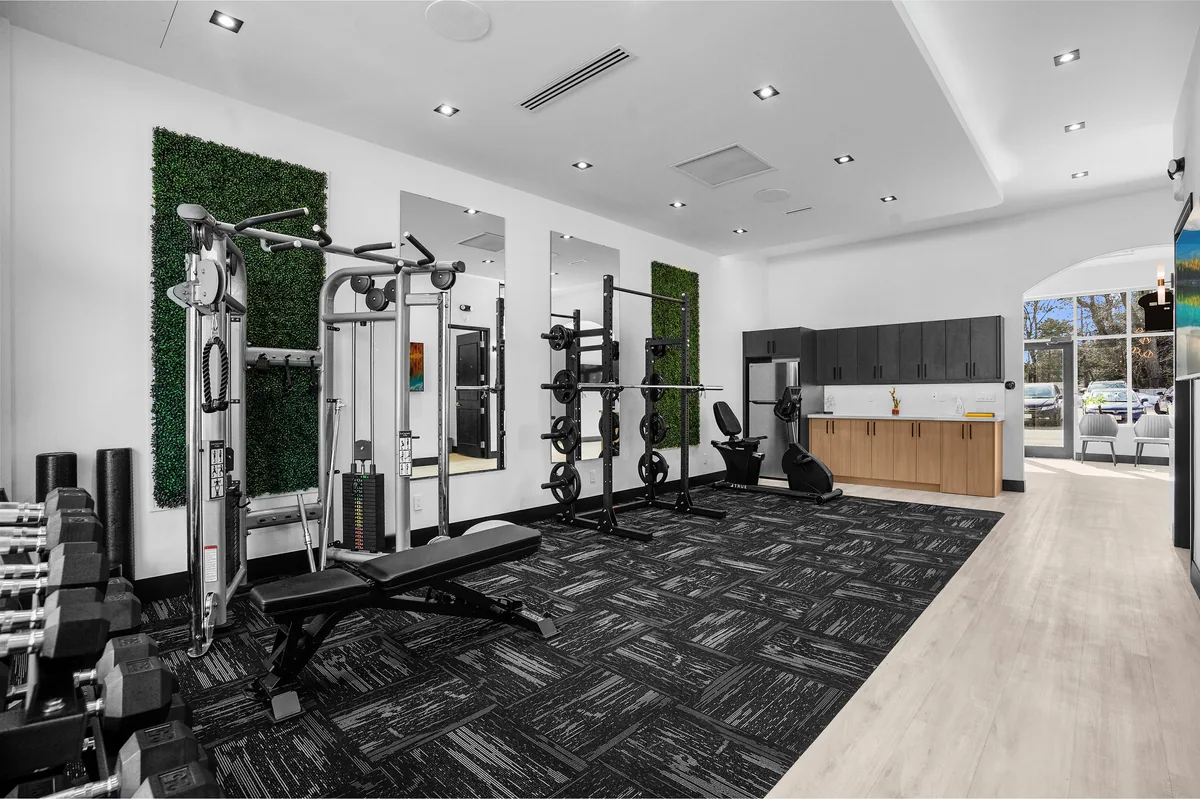
We build hip and leg strength in our on-site gym. A stationary bike is one fitness option to try.
Walking with rest breaks
You walk in short bouts with sit-down breaks and add a little at a time.
Balance work if you feel unsteady
Balance exercises were rare in stenosis trials, so the research is thin. See physiotherapy for seniors for more on balance.
When to See a Doctor First
These signs need a doctor. Some need care right away.
Call 911 or go to the ER now
- New trouble peeing, or losing control of your bladder or bowels
- Numbness in your groin or saddle area (where you sit on a bike seat)
- Leg weakness that is getting worse fast
See a doctor first
- Leg or foot weakness that is slowly getting worse
- Foot drop, when the front of your foot drags or slaps as you walk
- Falls, or feeling more unsteady than before
- Calf pain with walking that eases when you stand still
- Back pain with a fever, weight loss you can't explain or a history of cancer
Physio is a good place to start
- Leg or buttock symptoms with walking that ease when you sit
- A stenosis diagnosis and a wish to walk farther
- Staying active while you wait to see a surgeon
No referral needed in Ontario. If you need a doctor, we'll tell you at your first visit.
Google reviews
What Patients Say About Our Clinic
Copied word for word from Google. Names are shortened for privacy. A … means part of a longer review is left out.
Very thorough assessment. I am very pleased with the attention to details and help recieved from this clinic.
Very clean, welcoming environment.
Friendly and helpful staff.
Would definitely recommend to anyone.
I would highly recommend Interlink for physiotherapy sessions. Dhiman is very knowledgeable and patient, taking the time to fully understand what your issues are and making sure he gets a full picture before beginning treatment. He includes you in setting goals and expectations. His treatments are varied and he explains why we would do each exercise. Furthermore, he would provide exercises or stretches to complete at home. Always felt at ease and comfortable to ask any questions or further clarification on anything discussed. …
The space is very clean and the equipment kept in great shape.
All staff are very welcoming and friendly making for a great atmosphere for recovery.
Knowledgeable and insightful. Clean facility to make you feel at ease. Friendly staff. …
Spinal Stenosis FAQs
Can physiotherapy help spinal stenosis?
Some research supports it. A 2022 review found moderate-quality evidence for programs that mix exercise with hands on care.
Will I need surgery?
That is a choice for you and your surgeon. The NASS guideline authors think fast, severe nerve loss is rare in mild to moderate stenosis.
Should I walk or cycle with stenosis?
Both were used in exercise trials, and one trial of 68 people found similar results. We usually start with short walks and sit-down breaks, then build up slowly.
Do I need a referral or a scan?
No referral is needed in Ontario, though some insurance plans want a doctor's note before they pay. If your exam suggests you need a doctor or a scan, we'll tell you.
What does it cost?
Your first visit is free for new patients: a full assessment and your first treatment. It's never billed to your insurer, and there's no obligation to continue. Follow-up visits are $95 for 30 minutes, and we bill most insurers directly.
Is the clinic easy to get to?
We're at 1280 Mohawk Rd #103 in Ancaster, about 8 minutes from the West Mountain. Parking is free right outside, and the entrance is on the ground floor with no stairs.
Plan Your Next Walk With Us
Your first visit is free for new patients: a full assessment and your first treatment. It's never billed to your insurer, and there's no obligation to continue.
New patients only · Never billed to your insurer · No referral needed
The Research on This Page
- Katz JN, et al. Diagnosis and management of lumbar spinal stenosis: a review. JAMA, 2022. Link
- Kreiner DS, et al. An evidence-based clinical guideline for the diagnosis and treatment of degenerative lumbar spinal stenosis (update). North American Spine Society. The Spine Journal, 2013. Link
- Delitto A, et al. Surgery versus nonsurgical treatment of lumbar spinal stenosis: a randomized trial. Annals of Internal Medicine, 2015. Link
- Zaina F, et al. Surgical versus non-surgical treatment for lumbar spinal stenosis. Cochrane Database of Systematic Reviews, 2016. Link
- Ammendolia C, et al. Non-operative treatment for lumbar spinal stenosis with neurogenic claudication: an updated systematic review. BMJ Open, 2022. Link
- Comer C, et al. Exercise treatments for lumbar spinal stenosis: a systematic review and intervention component analysis of randomised controlled trials. Clinical Rehabilitation, 2024. Link
- Pua YH, et al. Treadmill walking with body weight support is no more effective than cycling when added to an exercise program for lumbar spinal stenosis: a randomised controlled trial. Australian Journal of Physiotherapy, 2007. Link
- Nadeau M, et al. The reliability of differentiating neurogenic claudication from vascular claudication based on symptomatic presentation. Canadian Journal of Surgery, 2013. Link
- Ontario Health. Low back pain: care for adults with acute low back pain. Quality standard, 2025 update. Link
This page shares general information only. It can't tell you what is causing your symptoms. Your physiotherapist or doctor can tell you what fits your situation.
Reviewed by Dhiman Patel, MScPT, registered with the College of Physiotherapists of Ontario. Last reviewed 23 September 2026.