
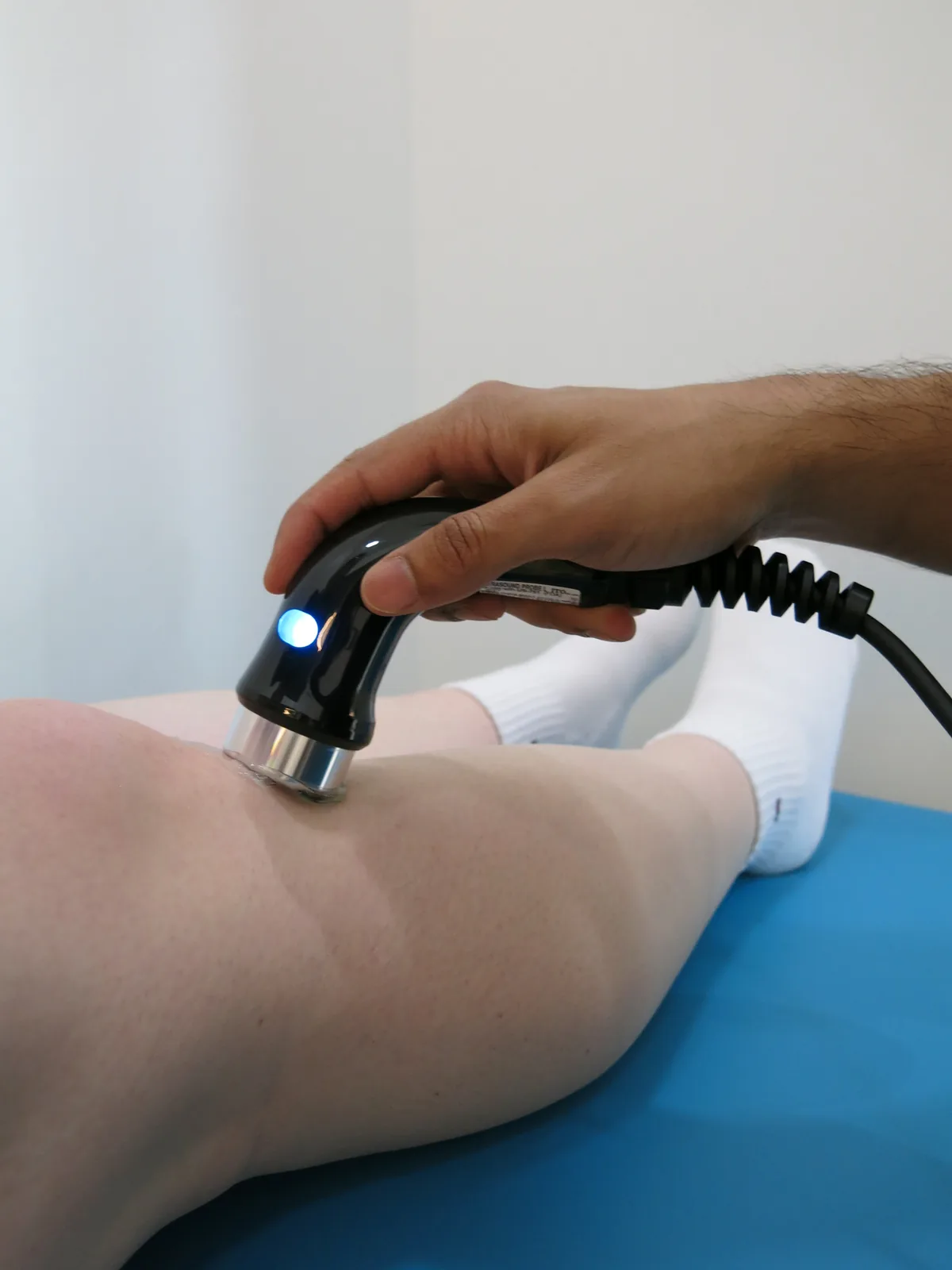
Knee pain from a torn meniscus
Meniscus Tear Physiotherapy
Help for a torn meniscus, the rubbery pad inside your knee. We explain what the research says about exercise and surgery, and when to see a doctor first.
Free first visit for new patients · No referral needed · Free parking at the door
- 4.9 on Google
- No Referral Needed
- Direct Billing Available
- Registered Physiotherapist
- Free Parking
What a Meniscus Tear Is
The meniscus is a rubbery, C-shaped pad of cartilage inside the knee joint. You have two in each knee. Common signs of a tear:
- Pain along the joint line, where the thigh bone meets the shin bone, that gets worse with pressure
- Swelling, often by the next day
- Catching, or the knee feels stuck for a moment
- Trouble squatting
A true locked knee is different. The knee gets stuck and can't fully straighten, even when you try. That needs a doctor soon, so check the signs further down this page. For other kinds of knee pain, see knee physiotherapy.
Two Common Types of Tear
Sudden tear from an injury
This happens with a clear injury, often a twist or quick turn in sport, and the pain starts right away. It's common in younger, active people and often comes with an ACL tear.
ACL rehabWear-related tear
This builds up slowly, often with no big injury, as the meniscus ages and gets more brittle. It's common in people over about 40. Doctors call it a degenerative tear.
Knee osteoarthritisA European knee surgery society defines a wear-related tear as one in someone over 35 with no major injury.
What the Research Says About Wear-Related Tears
Tears on MRI are common. A US study looked at MRI scans (detailed pictures of the knee) of 991 adults aged 50 to 90. Meniscus tears were common, and more common with age. Of the people with a tear, 61% had no knee pain, aching or stiffness in the past month. A tear on your scan may or may not explain your pain.
Exercise compared with surgery. A Norwegian trial (Kise and others, 2016) included 140 adults aged about 35 to 60 with a wear-related tear. Half did 12 weeks of guided exercise. Half had keyhole surgery to trim the tear, called arthroscopic partial meniscectomy. After 2 years, knee scores were about the same in both groups. The exercise group had gained more thigh strength at 3 months. In the exercise group, 19% chose surgery later, and the study found no extra benefit from it.
Surgery compared with sham surgery. A Finnish trial (Sihvonen and others, 2013) included 146 adults aged 35 to 65. All had a wear-related tear and no signs of arthritis. Each person had real surgery to trim the tear or a sham (pretend) surgery. They didn't know which one. After 12 months, the real surgery was no better than the sham for knee pain and other symptoms.
What guidelines say. In 2017, a BMJ guideline panel strongly advised against keyhole surgery for wear-related knee problems. This includes knee arthritis and meniscus tears, even with catching. It says a true locked knee may be an exception. The European group advises waiting 3 to 6 months after symptoms start before offering surgery. The wait can be shorter if catching or locking is severe.
Sudden Tears and a Locked Knee
The research above is about wear-related tears. The BMJ guideline did not look at young people with sports injuries, or anyone with a major injury.
Sudden tears often happen along with an ACL tear. A European group reviewed the studies in 2019. In those studies, 57% to 80% of people with a torn ACL also had a meniscus tear. A surgeon may repair some sudden tears.
Sometimes a large torn piece flips and gets stuck in the joint, so the knee can't straighten. The same group says this kind of tear should be put back in place and repaired as early as possible. That's why a locked knee needs a doctor soon.
After meniscus surgery, see rehab after surgery. For injuries in sport, see sports injury physiotherapy.
How We Help
At our Ancaster clinic, your plan is built around exercise in our on-site gym and at home. Hands on care can be part of it too.
Free first visitFree
A full assessment and your first treatment, free for new patients and never billed to your insurer. If your knee needs a doctor first, we'll tell you.
Settle the swelling
We start with gentle movement and simple steps to help calm swelling at home. You'll learn which activities to ease off on for now.
Build strength
You work on thigh and hip strength in our gym, with a home program between visits. In the Kise trial, the exercise program lasted 12 weeks.
Return to activity
We help you step back into sport or running at a pace your knee can handle. If your knee isn't settling, we'll talk with you about seeing your doctor.
When to See a Doctor First
Some knee problems need a doctor's check before physio. A few need care right away.
Call 911 or go to the ER now
- Your knee looks out of shape after an injury
- A fever with a red, hot knee
See a doctor first
- Your knee is locked and you can't straighten it
- Your knee gives way or feels unstable
- Big swelling within a few hours of an injury, which can be a sign of an ACL tear
- You can't put any weight on the leg or can't move the knee
Physio is a good place to start
- Knee pain that came on slowly, with no big injury
- An MRI shows a wear-related tear and you want to know your options
- Catching or clicking, and your knee still fully straightens
- Your surgeon says you can start rehab after meniscus surgery
No referral needed in Ontario. If you need a doctor, we'll tell you at your first visit.
Google reviews
What Patients Say About Our Clinic
Copied word for word from Google. Names are shortened for privacy. A … means part of a longer review is left out.
Highly recommend. Dhiman and his staff are kind, professional, knowledgeable and accommodating. … The office is well-organized, clean and comfortable. I will be back and recommend my family and friends to visit.
Very thorough assessment. I am very pleased with the attention to details and help recieved from this clinic.
Very clean, welcoming environment.
Friendly and helpful staff.
Would definitely recommend to anyone.
I went for physiotherapy due to knee pain from a running injury. The treatment plan was structured and focused on proper recovery, not just short-term relief. … Highly recommend for sports-related injuries.
Meniscus Tear FAQs
Do I need surgery for a meniscus tear?
For wear-related tears, a 2017 guideline advises against keyhole surgery. A European group says to try other care first and wait 3 to 6 months before surgery is offered. A locked knee or a sudden tear from an injury may need a surgeon.
My MRI shows a tear. Is that why my knee hurts?
Maybe. One study looked at adults aged 50 to 90. Of those with a tear on MRI, 61% had no knee pain or stiffness in the past month.
What's the difference between catching and a locked knee?
Catching is a short stuck or clicking feeling that lets go. A true locked knee stays stuck and can't fully straighten. A locked knee needs a doctor soon.
How long does meniscus rehab take?
It depends on your knee and your goals. In the Kise trial, the exercise program lasted 12 weeks. Your physiotherapist will check your progress and adjust your plan.
Do I need a referral or an MRI first?
No referral is needed in Ontario, and you can book without an MRI. Some insurance plans want a doctor's note before they pay.
How much does it cost?
Your first visit is free for new patients: a full assessment and your first treatment. It's never billed to your insurer, and there's no obligation to continue. Follow-up visits are $95 for 30 minutes, one on one with a registered physiotherapist.
Where is the clinic?
We're at 1280 Mohawk Rd #103 in Ancaster, on the western edge of the Hamilton Mountain. It's about 10 minutes from Dundas and 12 from the Central Mountain, with free parking at the door.
Get Your Knee Checked in Ancaster
Book your free first visit for new patients. We'll assess your knee and explain your options, including when a doctor should see it first.
New patients only · Never billed to your insurer · No referral needed
The Research on This Page
- MedlinePlus. Meniscus tears: aftercare. US National Library of Medicine, 2025. Link
- MedlinePlus. Anterior cruciate ligament (ACL) injury: aftercare. US National Library of Medicine, 2025. Link
- NHS. Knee pain. NHS website, 2023. Link
- Englund M, et al. Incidental meniscal findings on knee MRI in middle-aged and elderly persons. N Engl J Med, 2008. Link
- Kise NJ, et al. Exercise therapy versus arthroscopic partial meniscectomy for degenerative meniscal tear in middle aged patients: randomised controlled trial with two year follow-up. BMJ, 2016. Link
- Sihvonen R, et al. Arthroscopic partial meniscectomy versus sham surgery for a degenerative meniscal tear. N Engl J Med, 2013. Link
- Siemieniuk RAC, et al. Arthroscopic surgery for degenerative knee arthritis and meniscal tears: a clinical practice guideline. BMJ, 2017. Link
- Beaufils P, et al. Surgical management of degenerative meniscus lesions: the 2016 ESSKA meniscus consensus. Knee Surg Sports Traumatol Arthrosc, 2017. Link
- Kopf S, et al. Management of traumatic meniscus tears: the 2019 ESSKA meniscus consensus. Knee Surg Sports Traumatol Arthrosc, 2020. Link
This page gives general information. Your physiotherapist or doctor can tell you what fits your situation.
Reviewed by Dhiman Patel, MScPT, registered with the College of Physiotherapists of Ontario. Last reviewed 23 September 2026.